





I have a confession to make , I can’t knit or crochet. So launching a charity knitting campaign to raise awareness on FGM may seem a bit odd.
Freedom Charity is asking all communities to knit (or crochet) red triangles in it’s awareness campaign to eradicate FGM. The groups will make their triangles to be worn on the lapel and sell them to friends, family and the community. The funds raised will help Freedom work with schools so they can learn how to deliver essential lessons on FGM. Schools will also receive copies of my book Cut Flowers to help change opinions on cutting.
My mum Savita’s lovely friend Tricia came up with a really beautiful pattern of a crochet triangle. It looks really elegant.
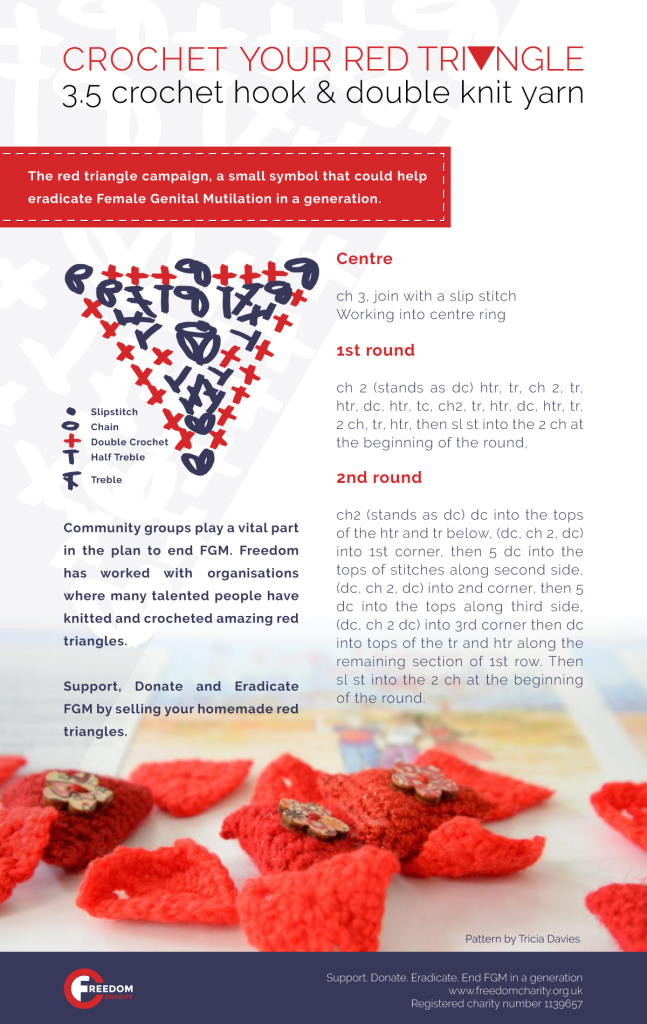
Having never read a knitting or crochet pattern I have shown the pattern to experts and all say ‘its easy to follow.’
Freedom FGM Crochet Red Triangle charity knitting
Crochet Triangle Pattern
3.5 crochet hook & double knit yarn
Centre ch 3, join with a slip stitch
Working into centre ring
1st round – ch 2 (stands as dc) htr, tr, ch 2, tr, htr, dc, htr, tc, ch2, tr, htr, dc, htr, tr, 2 ch, tr, htr, then sl st into the 2 ch at the beginning of the round,
2nd round – ch2 (stands as dc) dc into the tops of the htr and tr below, (dc, ch 2, dc) into 1st corner, then 5 dc into the tops of stitches along second side,
(dc, ch 2, dc) into 2nd corner, then 5 dc into the tops along third side,
(dc, ch 2 dc) into 3rd corner then dc into tops of the tr and htr along the remaining section of 1st row. Then sl st into the 2 ch at the beginning of the round.
Please send me details on how you get on and send me your attempts.

FGM prevention matters, but survivor care must not be the unfinished part of UK policy. Aneeta Prem calls for a clear NHS pathway, specialist counselling, trained professionals and research into reconstructive surgery.
Many children are not choosing the best place to spend their time. They are choosing the safest unsafe place available.
Dishonour Abuse is abuse, coercion or violence justified through claims of family reputation, shame or so-called honour. I use the term because “honour-based abuse” repeats the perpetrator’s excuse, while Dishonour Abuse names the conduct and places responsibility where it belongs: with the person causing harm, not the victim, child or survivor.

The murder of Henry Nowak raises difficult questions about policing, evidence and the duty to preserve life
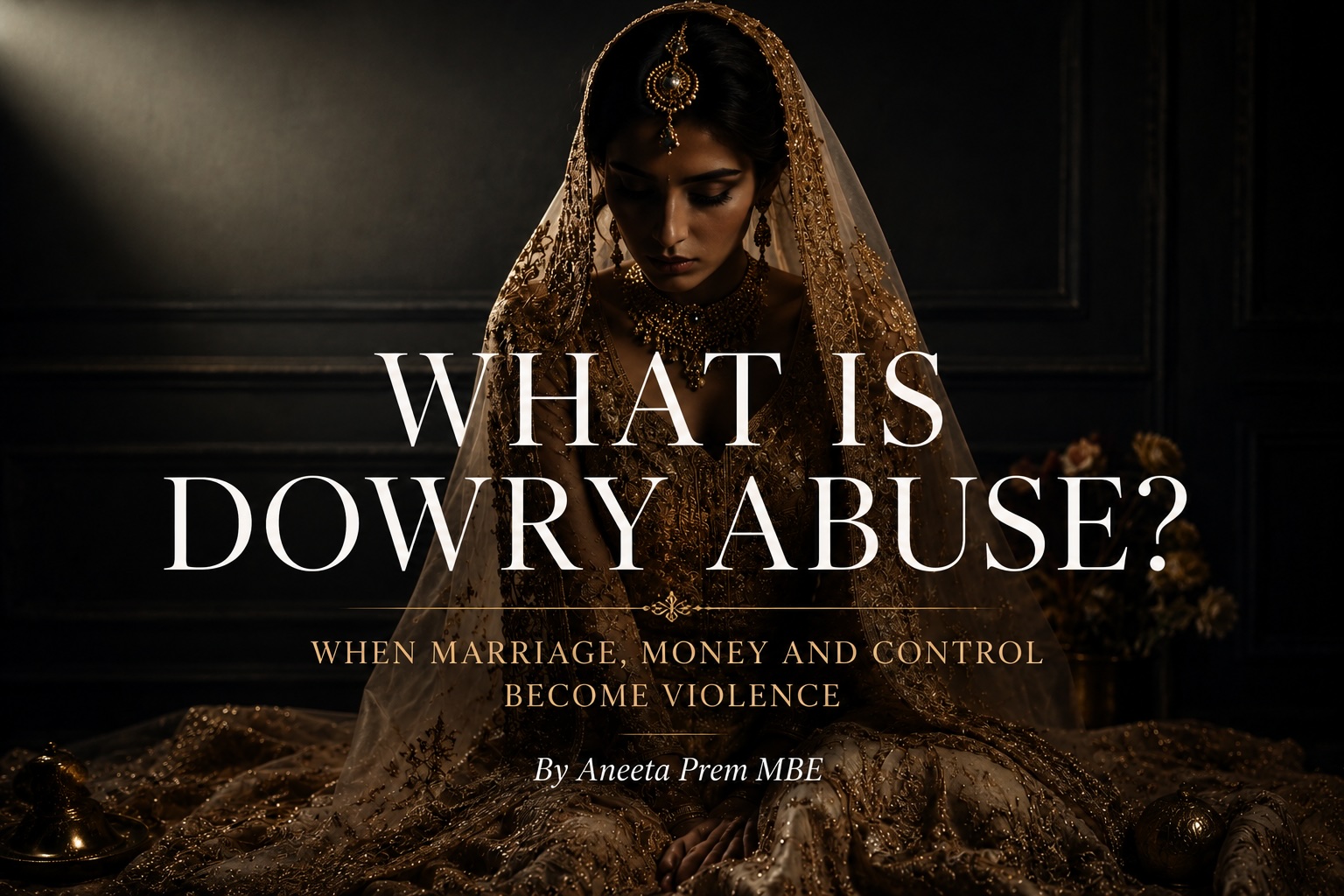
The death of Twisha Sharma has reopened a global question about dowry abuse, coercive control, family reputation and why women are still judged by what their families can provide.
Afghanistan's child marriage is worsening as hunger, aid cuts and Taliban family law place girls at risk. Aneeta Prem writes on why silence is not consent.