





Dishonour Abuse: Why We Must Stop Calling Child Abuse Honour
What is Dishonour Abuse?
Dishonour Abuse is abuse, coercion or violence justified through claims of family reputation, shame or so-called honour. I use the term because “honour-based abuse” repeats the perpetrator’s excuse, while Dishonour Abuse names the conduct and places responsibility where it belongs: with the person causing harm, not the victim, child or survivor.
“Stop blaming the victim by calling it honour. It is child abuse.”
Those are the words of Anna, a survivor of female genital mutilation.
Anna was harmed as a child by someone who should have protected her. Her words expose the question Britain still needs to answer: if honour is not a defence in law, why is it still at the centre of the label?
The law has moved forward. Now the language must catch up.
On 25 February 2026, the Government announced a new legal definition of so-called honour-based abuse, alongside statutory guidance intended to help police, social workers and other public authorities identify victims, support them and pursue perpetrators more effectively. That reform matters. It should improve recognition, recording, safeguarding and prosecution.
But legal recognition and public language do not have to do the same job.
The purpose of the legal definition is to help professionals identify a pattern of abuse. The purpose of safeguarding language is to help society understand who is responsible.
That distinction matters.
Why the new legal definition matters
The new legal definition is for the purposes of statutory guidance. It does not create one single criminal offence called honour-based abuse.
The underlying offences remain what they already are. Forced marriage remains forced marriage. Female genital mutilation remains FGM. Coercive control remains coercive control. Assault, rape, threats, harassment, trafficking, child cruelty, modern slavery, virginity testing, hymenoplasty and related offences remain criminal offences.
The Government’s legal memorandum explains that the statutory guidance is designed to support public authorities in understanding, identifying, preventing and responding to honour-based abuse. It also confirms that public authorities must have regard to the guidance when exercising their public functions.
That is an important legal point.
A statutory definition helps public bodies recognise when apparently separate harms are connected by family pressure, reputation, shame, coercion, control or perceived dishonour. It should help professionals see the pattern earlier, record it more consistently and protect victims more effectively.
Victims are failed when agencies see isolated incidents rather than a connected pattern of abuse.
Forced marriage may be treated as a family matter.
FGM may be viewed as a cultural issue.
Coercive control may be dismissed as strict parenting.
Threats may be minimised as domestic disputes.
A shared legal framework should help police, prosecutors, schools, health professionals, social workers and local authorities recognise those risks earlier and work together more effectively.
There should be no doubt about my position: stronger legal recognition is needed.
But recognising abuse is not the same as describing it.
Do we still need the phrase honour-based abuse in law?
Yes, where it helps professionals identify the recognised legal pattern.
Police, prosecutors, local authorities, schools, health services and social workers need shared language when they record, flag, investigate and respond to these cases. A statutory definition can support consistency. It can help professionals identify risk. It can prevent vital information from falling through the cracks.
However, public safeguarding language should go further.
The law may need a shared definition. Public language should reject the excuse.
That is why Dishonour Abuse matters.
Honour-based abuse describes the abuse through the justification often claimed by the perpetrator. Dishonour Abuse describes the conduct itself.
One starts with the excuse.
The other starts with the harm.
Honour is not a defence in law
Honour is not a defence in law.
No court would accept honour as a justification for forcing a child into marriage.
No court would accept honour as a justification for FGM.
No court would accept honour as a justification for coercion, threats, violence, sexual abuse or control.
The criminal law already has the language it needs: forced marriage, FGM, coercive control, assault, rape, threats, harassment, trafficking, child cruelty, modern slavery, virginity testing and hymenoplasty.
The law names conduct.
The law names harm.
The law does not need honour to act.
Safeguarding language should be equally clear.
Why Dishonour Abuse is more accurate
Dishonour Abuse describes coercion, control or violence justified through ideas of reputation, shame or so-called honour.
It changes where responsibility sits.
A teacher who hears the word honour may begin by thinking about culture.
A safeguarding professional should begin by thinking about risk.
A police officer should begin by thinking about criminal behaviour.
A social worker should begin by thinking about the safety of the child.
Dishonour Abuse starts in the right place.
It focuses attention on coercion, control, intimidation, exploitation, violence and abuse. It places responsibility with the person causing harm, not with the child, victim or survivor.
After decades of safeguarding work, I have learned that language can either expose abuse or soften it. The word honour softens what should be named as coercion, betrayal and child abuse.
Dishonour Abuse tells survivors that the shame was never theirs.
What the Forced Marriage Unit figures show
The latest Forced Marriage Unit figures show why this is not an abstract argument.
In 2025, the joint Home Office and Foreign, Commonwealth and Development Office Forced Marriage Unit received 1,295 contacts relating to possible forced marriage or FGM. This included 406 cases where tailored assistance was provided and 889 forced marriage or FGM enquiries.
Of the 406 tailored assistance cases, 40% involved victims aged 17 or under, 26% involved male victims, and 75 cases involved mental-capacity concerns.
The figures also challenge one of the most dangerous misunderstandings about forced marriage: that it is mainly an overseas problem. In 2025, 58 cases had no overseas element, meaning the potential or actual forced marriage took place entirely within the UK. That was an increase from 15 cases in 2024 and 10 cases in 2023.
Behind every figure is a person.
A girl afraid to go home.
A boy pressured into a marriage he does not want.
A young person frightened of being taken abroad.
A vulnerable adult facing coercion from people they depend upon.
These people are not describing honour.
They are describing fear.
They are describing control.
Very often, they are describing betrayal.
That word is too often missing from the national debate.
The people responsible are frequently not strangers. They may be parents, relatives, trusted adults or members of the wider family network. They are the people who should have protected the child.
The deepest wound is not only the abuse itself.
It is the betrayal.
Why this matters before the school holidays
As the summer holidays approach, the risk becomes more urgent.
Schools may be the last safe place where warning signs are seen. Some children may be taken abroad. Some may not return in September. Others may face forced marriage, FGM or escalating family control within the UK.
For those children, language is not cosmetic.
Language influences whether adults recognise danger and act early enough.
If professionals think first about culture, they may hesitate.
If they think first about risk, they may protect.
That is the practical difference.
What the CPS guidance confirms
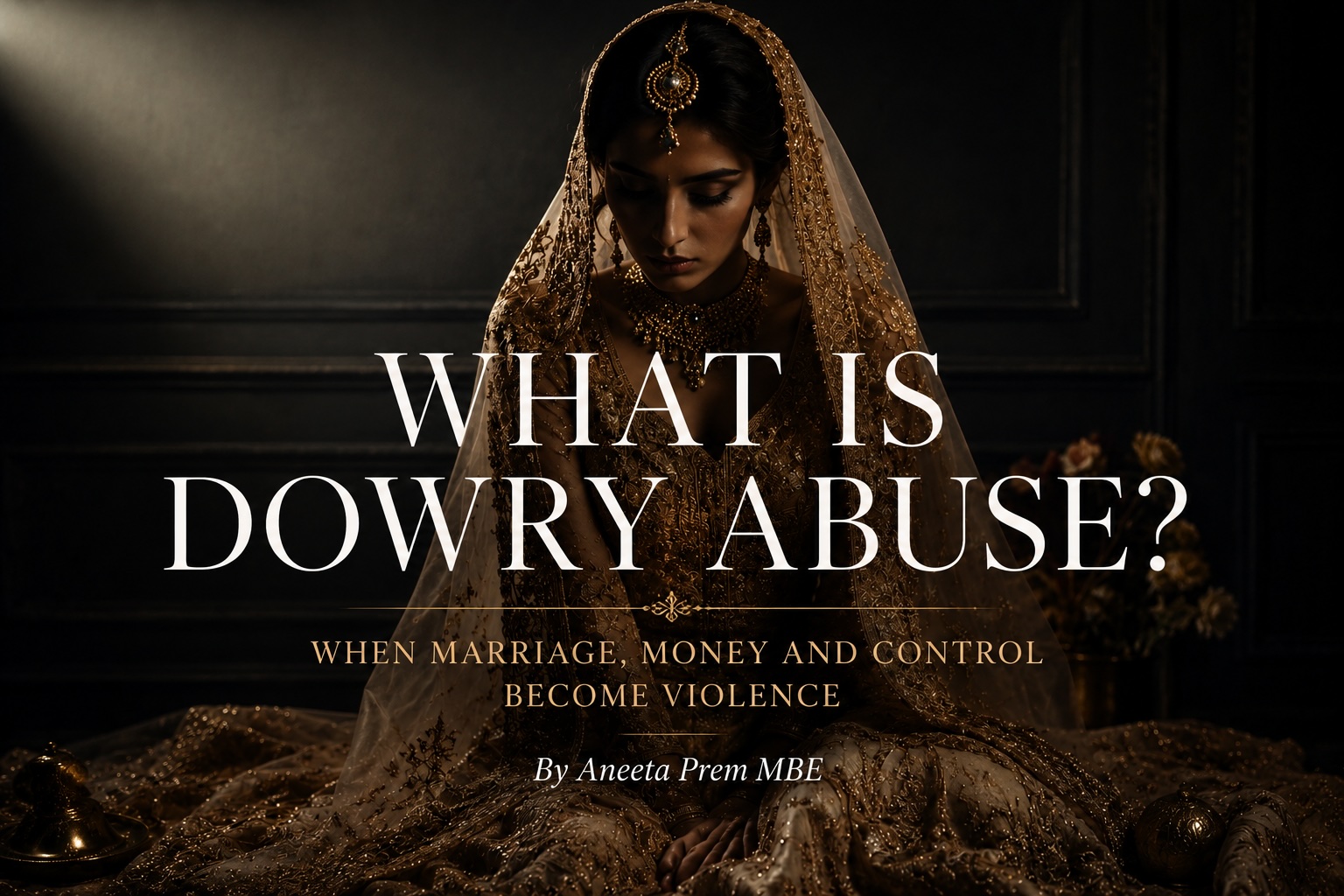
The Crown Prosecution Service has widened its guidance on so-called honour-based abuse, forced marriage and harmful practices. The updated guidance includes spiritual abuse, immigration-related exploitation, dowry abuse, transnational marriage abandonment, virginity testing and hymenoplasty.
That confirms the point.
This abuse is not one act.
It is a pattern.
The CPS guidance also makes clear that honour-based abuse is an overarching category of abuse and harmful practice, rather than one specific offence. Prosecutors must therefore consider the underlying criminal conduct, including threats, violence, coercion, abuse and related offences.
That is exactly why language matters.
The law can recognise the pattern without dignifying the excuse.
This is not an attack on culture or faith
Dishonour Abuse is not about attacking communities, culture or faith.
Abuse is abuse, whoever commits it and whatever excuse is used to justify it.
No culture owns abuse.
No faith requires abuse.
No community is protected by silence.
The language of honour belongs to the perpetrator. The language of safeguarding must belong to the victim.
That is why the term Dishonour Abuse is necessary.
It names what has happened without repeating the justification.
It tells children that the shame is not theirs.
It tells perpetrators that honour will not protect them.
It tells professionals to look first at conduct, risk and criminality.
Why Freedom Charity’s work matters
Freedom Charity was founded in 2009 to protect children and young people from forced marriage, female genital mutilation and related forms of abuse.
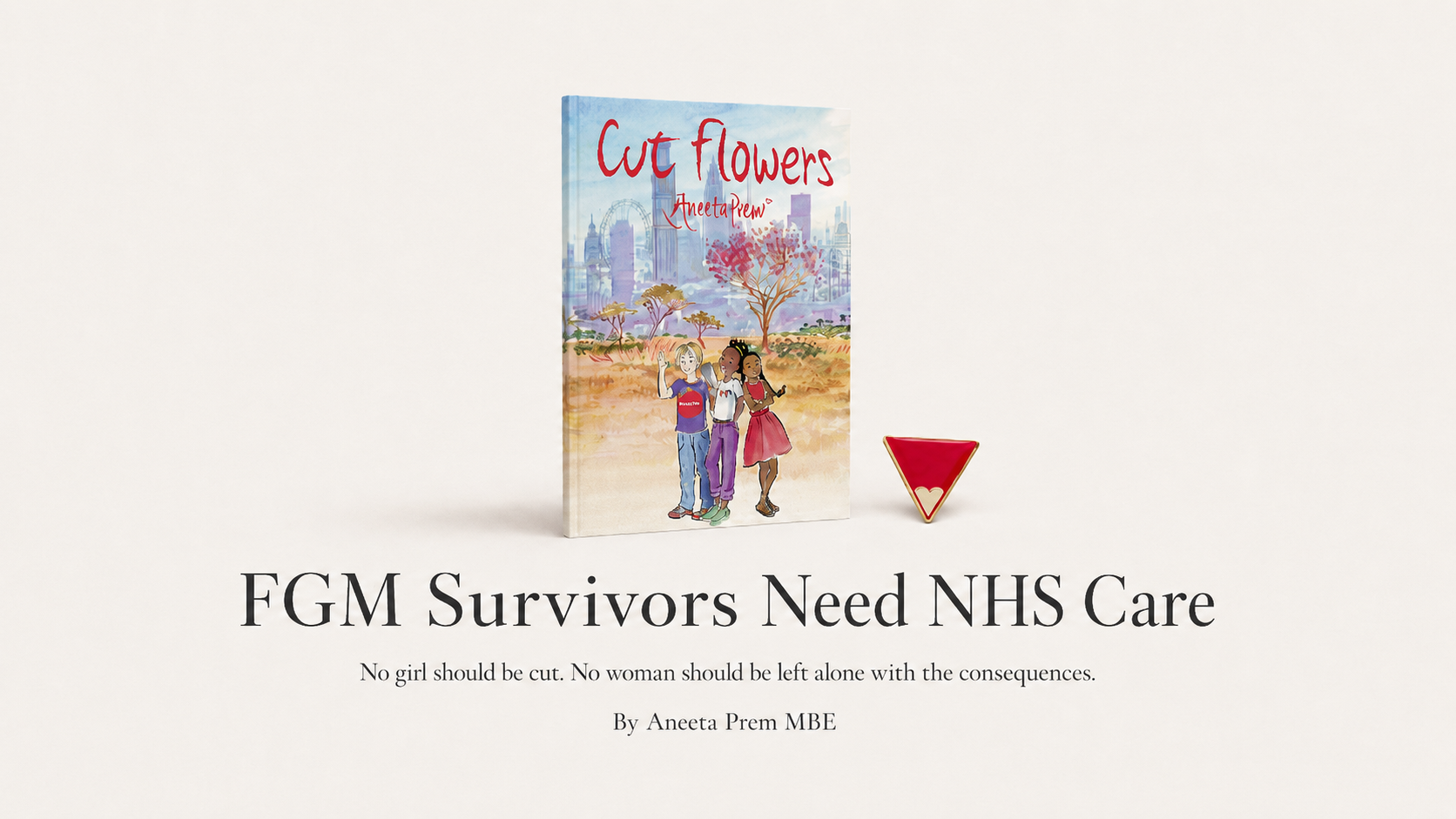
Through its helpline, safeguarding work, PSHE-accredited lesson plans, Not In My Name, the Red Triangle Badge, and books including But It’s Not Fair and Cut Flowers, Freedom Charity has worked to help young people recognise danger before harm becomes irreversible.
This work is rooted in a simple principle: children cannot protect themselves from adults who control their movements, education, friendships, bodies, documents, phones, money, travel or marriage choices.
That is why the language must be sharp.
Vague language protects systems.
Clear language protects children.
What should happen next?
Government should retain strong legal recognition of so-called honour-based abuse while adopting Dishonour Abuse in safeguarding training, professional practice, public communications and data systems.
That would not weaken protection.
It would strengthen it.
The statutory definition can help professionals identify the pattern.
Dishonour Abuse can help the public understand the truth.
Together, they can support earlier intervention, clearer recording, stronger prosecution and better protection for victims.
The aim is not to win a linguistic argument.
The aim is to protect children, young people and vulnerable adults before the harm becomes irreversible.
Parliament has recognised the pattern of abuse.
Now our language must recognise the truth.
Honour is not the motive we should dignify.
Dishonour is the conduct we must name.
What is Dishonour Abuse?
Dishonour Abuse is abuse, coercion or violence justified through claims of reputation, shame or so-called honour. Aneeta Prem MBE uses the term because it names the conduct and places responsibility on the person causing harm, rather than repeating the perpetrator’s claim of honour.
What is the new legal definition of so-called honour-based abuse?
The Government has introduced a legal definition of so-called honour-based abuse for the purposes of statutory guidance. It is intended to help public authorities recognise when abusive behaviour is linked to perceived shame, dishonour, family reputation, coercion or failure to comply with expected norms. The aim is to improve identification, safeguarding, information sharing and multi-agency working.
Does the new definition create a new criminal offence?
No. The new definition does not create one single criminal offence called honour-based abuse. The underlying offences remain offences such as forced marriage, FGM, coercive control, assault, threats, harassment, trafficking, child cruelty, virginity testing, hymenoplasty and related crimes.
Why does Aneeta Prem use the term Dishonour Abuse?
Aneeta Prem uses the term Dishonour Abuse because it places responsibility where it belongs: with the person causing harm. The term honour-based abuse describes the justification often claimed by perpetrators. Dishonour Abuse describes the conduct itself.
What is the difference between honour-based abuse and Dishonour Abuse?
Honour-based abuse describes abuse through the perpetrator’s claimed justification of honour. Dishonour Abuse describes coercion, control, violence and abuse without dignifying that excuse. It places shame with those who abuse, threaten, force, control or harm.
What do the 2025 Forced Marriage Unit figures show?
The 2025 Forced Marriage Unit figures show 1,295 contacts relating to possible forced marriage or FGM. The Unit provided tailored assistance in 406 cases. Forty per cent involved victims aged 17 or under, 26% involved male victims, and 75 cases involved mental-capacity concerns. The figures also show that forced marriage can take place entirely within the UK.
Sources
GOV.UK: New laws to protect victims of so-called honour-based abuse
https://www.gov.uk/government/news/new-laws-to-protect-victims-of-honour-based-abuse
GOV.UK: Delegated powers memorandum, Crime and Policing Bill, 23 February 2026
https://www.gov.uk/government/publications/crime-and-policing-bill-2025-delegated-powers-supplementary-memoranda/delegated-powers-memorandum-23-february-2026
GOV.UK: Forced Marriage Unit statistics 2025
https://www.gov.uk/government/statistics/forced-marriage-unit-statistics-2025/forced-marriage-unit-statistics-2025
Crown Prosecution Service: Spiritual and immigration abuse included in CPS honour-based abuse guidance for first time
https://www.cps.gov.uk/cps/news/spiritual-and-immigration-abuse-included-cps-honour-based-abuse-guidance-first-time
Crown Prosecution Service: Honour-Based Abuse, Forced Marriage and Harmful Practices prosecution guidance
https://www.cps.gov.uk/prosecution-guidance/honour-based-abuse-forced-marriage-and-harmful-practices
GOV.UK: Crime and Policing Act 2026 collection
https://www.gov.uk/government/collections/crime-and-policing-act-2026
Further reading and related resources
Aneeta Prem MBE official website
https://www.aneeta.com/
Aneeta Prem MBE: Freedom Charity
https://www.aneeta.com/freedom-charity
Aneeta Prem MBE: But It’s Not Fair
https://www.aneeta.com/but-its-not-fair
Aneeta Prem MBE: Cut Flowers
https://www.aneeta.com/cut-flowers
Aneeta Prem MBE: Capacity, Consent and Dishonour Abuse
https://www.aneeta.com/blog/capacity-consent-and-dishonour-abuse
Freedom Charity: Dishonour Abuse
https://freedomcharity.org.uk/dishonour-abuse/
Freedom Charity: Dishonour Abuse Definition
https://freedomcharity.org.uk/dishonour-abuse-definition/
Freedom Charity: Forced Marriage
https://freedomcharity.org.uk/forced-marriage/
Freedom Charity: Female Genital Mutilation
https://freedomcharity.org.uk/female-genital-mutilation/
Freedom Charity: But It’s Not Fair
https://freedomcharity.org.uk/but-its-not-fair-forced-marriage-book/
Freedom Charity: Cut Flowers and forced marriage/FGM books for schools
https://freedomcharity.org.uk/forced-marriage-and-fgm-books-for-schools/
Freedom Charity: Red Triangle Badge
https://freedomcharity.org.uk/red-triangle-badge/
Freedom Charity: Not In My Name campaign
https://freedomcharity.org.uk/not-in-my-name-campaign/
By Aneeta Prem MBE
Founder of Freedom Charity London
Published: 14 June 2026