





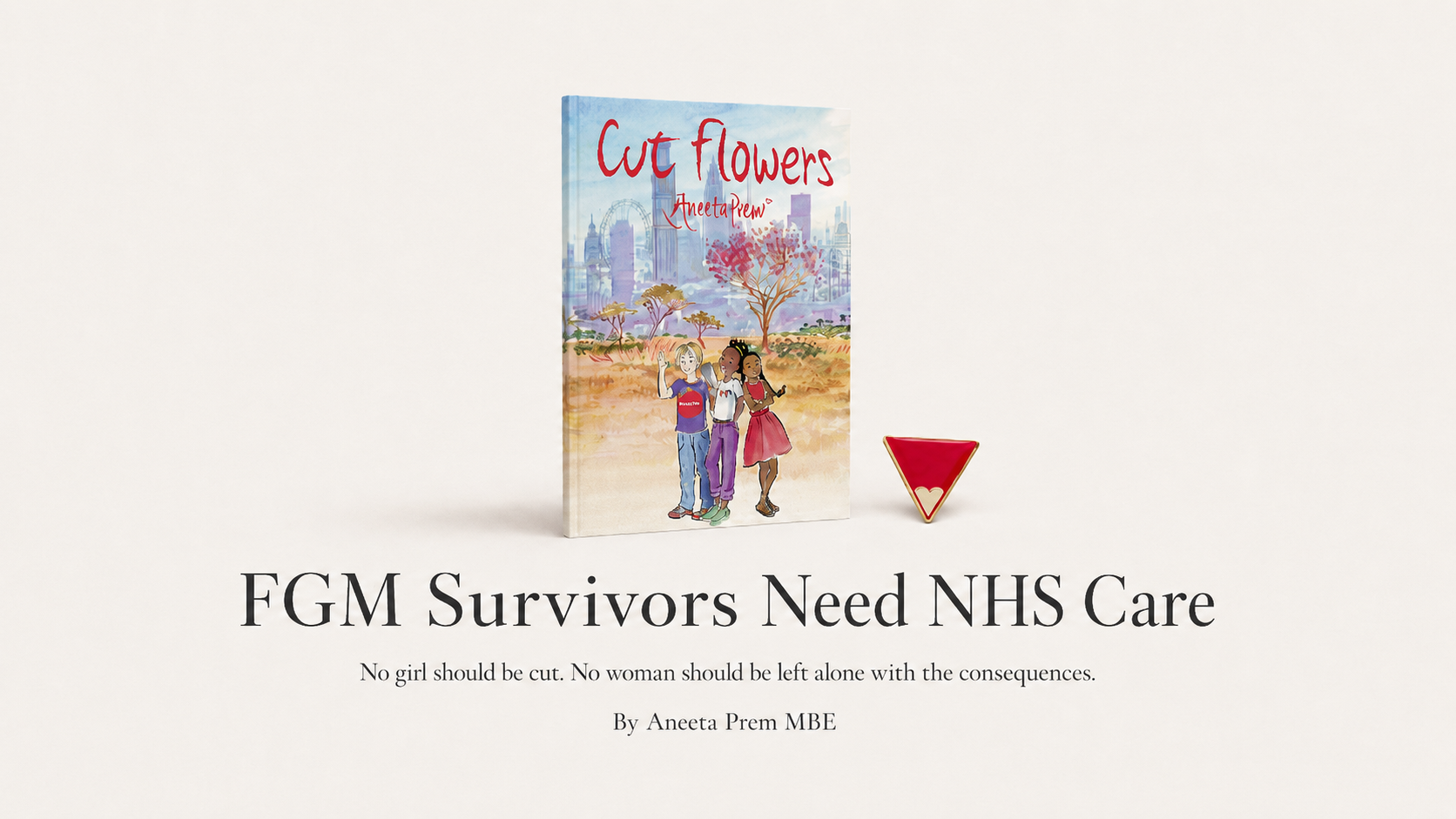
FGM prevention is essential, but prevention cannot be the unfinished part of survivor care. Women and girls living with the consequences of female genital mutilation need a clear NHS pathway, specialist counselling, trained professionals, appropriate interpreters and honest information about every clinically responsible treatment option.
A survivor once told me she remembered being cut. She remembered the pain, the blood and the humiliation. Her mother had paid for it. She was seven years old.
As an adult, she lives with the consequences: difficulty urinating, repeated infections, sexual pain and anger at the adults and systems that failed her. She said she felt we had all failed her.
What answer do we give to that?
FGM is not culture, religion, honour or a private family matter. It is violence against a girl’s body, child abuse and a human-rights violation. The duty to prevent it is absolute. Our duty to care for survivors must be just as clear.
Prevention is not enough
For years, I have worked through Freedom Charity to prevent FGM through school education, safeguarding training, the Red Triangle Badge, the Not In My Name message for boys and young men, and my novel Cut Flowers.
That work matters because children need language before they can recognise danger or ask for help. Teachers and friends need to understand the warning signs. Boys must grow up knowing that FGM is not love, purity, marriageability or honour.
But prevention is not the whole duty. A country that condemns FGM must also care properly for the women already living with its physical, psychological, sexual and maternity-related consequences.
What the NHS data shows
NHS England’s annual FGM report for April 2024 to March 2025 recorded 6,980 individual women and girls attending services where FGM was identified. Those women and girls accounted for 16,300 attendances at NHS trusts and GP practices.
These figures do not describe an abstract overseas problem. They represent women attending GP surgeries, maternity units, sexual-health services, mental-health services and hospitals in England.
Some survivors remember exactly what happened. Others were cut as babies. Some have never told anyone. Others disclosed what happened and still struggled to reach suitable care. The number recorded by the NHS is therefore a measure of identified need, not the full scale of harm.
Care should not depend on postcode
The NHS provides specialist FGM services, and many clinicians, midwives, counsellors and health advocates deliver serious and compassionate care. The national NHS clinic list also shows that provision is unevenly distributed and that referral routes vary.
Parliament’s Women and Equalities Committee described access to services as a postcode lottery and found that counselling was often inadequate. A survivor’s chance of receiving specialist help should not depend on where she lives, whether her GP knows the correct referral route or whether she happens to meet the right professional.
That is not a national pathway. It is chance.
What should an NHS pathway provide?
A clear national pathway should be easy for survivors and professionals to understand. It should include:
- a clear route to specialist assessment and referral
- trauma-informed psychological support and specialist counselling
- trained interpreters who understand privacy and safeguarding
- sexual-health, maternity and pain support
- deinfibulation where clinically appropriate
- support for urinary, infection-related and other physical consequences
- honest, evidence-based information about reconstructive surgery
- clear safeguarding routes where a child or another girl may be at risk
A woman should not have to repeat the most private injury of her life to several professionals before someone knows where to refer her. Nor should she be given only a leaflet or a rushed conversation when the consequences affect her body, relationships, confidence and mental health.
What about reconstructive surgery?
The discussion about reconstructive surgery must be careful, evidence-led and centred on the survivor.
Reconstruction is not magic. It cannot erase what happened, and it will not be right for every woman. No survivor should be pressured towards surgery or given unrealistic promises about pain, sensation, appearance or trauma.
However, caution must not become neglect. Some survivors want to understand whether surgery could help with pain, sexual function, body distress or their sense that something was taken from them. Others do not want surgery. Both choices deserve respect.
The Royal College of Obstetricians and Gynaecologists supports further research into the role of reconstructive surgery for women affected by FGM. Parliament’s Women and Equalities Committee has also pressed for research and scrutiny of access.
Where evidence is incomplete, the answer is properly designed research, safe protocols, long-term follow-up and honest consent. An evidence gap should lead to research, not silence.
FGM removed choice. Survivor care should restore informed choice wherever medicine can do so safely.
Why this is a human-rights issue
We cannot claim to lead the world on ending violence against women and girls while leaving survivors to navigate pain, infection, sexual trauma and shame through a system that depends too heavily on geography and chance.
Survivors need professionals who do not flinch, judge or dismiss. They need services that see the whole woman, not only the injury. They need care that recognises that the trauma of FGM does not end on the day a girl is cut.
A seven-year-old child cannot consent, protect herself from organised abuse or challenge the adults controlling her. Prevention is the responsibility of adults, government, schools, health services and safeguarding professionals. When prevention fails, care must not fail as well.
Stories can protect children
I wrote Cut Flowers because policy speaks to systems, but stories can reach children.
The novel follows two girls whose summer holidays unfold very differently. It was created with safeguarding education in mind so pupils, teachers, parents and boys could understand the danger before another child was harmed.
Freedom Charity’s Red Triangle Badge and Not In My Name work carry the same message: FGM is child abuse, and silence must never be mistaken for acceptance.
Education can help prevent the next act of FGM. It must sit alongside proper care for those already living with its consequences.
What must change now
The UK needs a clear national NHS pathway for FGM survivors. Professional training must be practical and consistent. Specialist counselling should be treated as essential rather than optional. Interpreters must be safe, trained and independent. Public information should tell survivors where they can obtain help without shame.
Research into reconstructive surgery should be properly funded so women can make informed choices based on evidence rather than uncertainty. National standards should be matched by care that can be accessed locally.
Above all, survivors should be believed and treated with dignity the first time they seek help.
No girl should be cut. No woman should be left alone with the consequences. No survivor should have to beg for care.
What do FGM survivors need from the NHS?
FGM survivors need a clear referral pathway, specialist assessment, trauma-informed counselling, trained professionals, safe interpreting, sexual-health and maternity support, pain care and honest information about clinically appropriate treatment options.
Are NHS services available for FGM survivors?
Yes. NHS specialist FGM services operate in England, and some accept self-referrals. Availability and referral arrangements vary, so survivors can ask a GP, midwife or another healthcare professional for help or use the NHS National FGM Support Clinics directory.
Is FGM a safeguarding issue?
Yes. FGM is illegal in the UK, a form of violence against women and girls and, when carried out on a child, child abuse. Immediate danger should be reported to the police on 999. Concerns that a girl may be at risk can also be reported through safeguarding services or the NSPCC FGM helpline.
Why does survivor care matter after FGM?
FGM can cause long-term physical, psychological, sexual and maternity-related harm. Preventing new cases remains essential, but a credible human-rights response must also provide care, dignity and informed choice to survivors.
Help and evidence
NHS: FGM information and support and National FGM Support Clinics.
NHS England: FGM Annual Report, April 2024 to March 2025.
UK Parliament: Women and Equalities Committee report on FGM.
RCOG: Female Genital Mutilation and its Management.
Freedom Charity: FGM information, Cut Flowers, Red Triangle Badge and FGM reconstruction surgery in the UK.