





By Aneeta Prem
London | 29 March 2026
A new safeguarding update has made one point harder to evade. Forced marriage and female genital mutilation are not side issues, private family matters or specialist concerns for somebody else. They sit within mainstream safeguarding, and institutions will increasingly be judged on whether their staff can recognise risk early enough to stop harm before it happens. On 18 March 2026, the Department for Education published the latest version of Working Together to Safeguard Children and its summary of changes, which says the new guidance strengthens anti-discriminatory practice and adds material on honour-, faith- or belief-based abuse.
That matters because the criminal justice record remains profoundly weak. The Women and Equalities Committee said in September 2025 that there had been only three convictions for FGM offences in England and Wales to date. The same report said low convictions reflected a mix of problems, including lack of referrals, weak evidence gathering and the reluctance of victims and survivors to testify against family members. That is not evidence of a solved problem. It is evidence of a system that still struggles to convert risk into protection and protection into justice.
The mistake is to read those low prosecution numbers as proof that FGM is now marginal. They are not. Parliament’s report said police recorded FGM offences in England and Wales and heard evidence that girls were still being taken abroad or subjected to FGM in the UK. A low conviction count in this context does not show low harm. It shows how difficult these cases are to detect, evidence and prosecute once they are already embedded in family and community control.
That is why this is not only a prosecution story. It is a safeguarding story first.
FGM cases rarely arrive with neat evidence. They arrive in fragments: fear, silence, sudden compliance, unexplained travel, coded language, family pressure, changes in behaviour, or a child who cannot yet describe what is happening in terms adults immediately recognise. By the time a case reaches the criminal threshold, the chance to prevent harm may already have gone. That is the harder truth behind the prosecution gap. The law can punish later. Safeguarding has to act earlier.
This is where schools matter. A policy document cannot notice that a pupil has become withdrawn. It cannot hear the tone of fear around a trip abroad. It cannot spot distress linked to secrecy, honour or control. Real people do that. Teachers, pastoral staff and designated safeguarding leads are often the adults best placed to see a pattern before it becomes irreversible harm. That is also why the legal framework places direct duties on teachers and regulated health and social care professionals to report known cases of FGM in under-18s to the police. The system already assumes that frontline staff matter. The question is whether they are equipped to act on what they see.
That is where training becomes decisive. Guidance is necessary, but it does not ask follow-up questions in a live case. It does not help a DSL decide whether a concern needs urgent escalation. It does not give a frightened child language in the moment she may be testing whether an adult is safe enough to trust. Parliament’s 2025 report pointed to the need for better professional training so concerns are recognised and referred earlier. In other words, the gap is not only legal. It is practical.
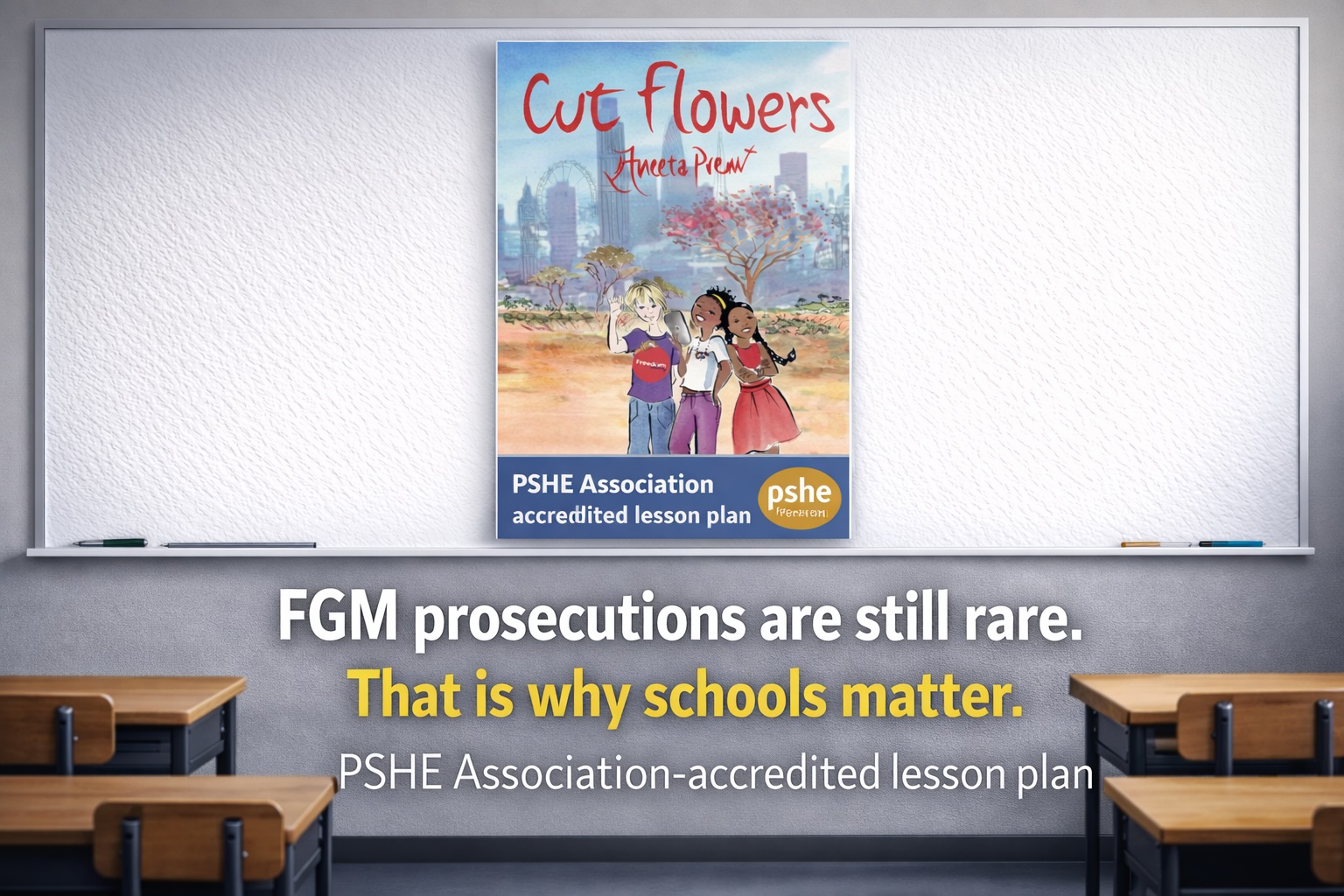
This is also why school-based prevention should not be treated as an educational extra. It is part of safeguarding infrastructure. Freedom Charity says its lesson plans on forced marriage and FGM for Key Stages 3 and 4 have received the PSHE Association Quality Mark, and the charity says these resources complement Cut Flowers and But It’s Not Fair. The PSHE Association makes clear that its Quality Mark applies to lesson plans and accompanying resources that meet its standards for safe and effective PSHE education; it does not quality assure training or consultancy generally. That distinction matters, and so does the recognition. It means schools can use a named, quality-assured teaching resource to support difficult conversations before risk becomes crisis.
For me, Cut Flowers is part of that prevention picture. Its value is not symbolic. A book can help make the hidden visible. It can help pupils recognise coercion, help staff open discussion safely, and help schools move beyond abstract warnings into something young people can actually understand. If prosecutions are rare because warning signs are missed, minimised or never joined together, then books, lesson plans and professional training are not peripheral to safeguarding. They are part of what serious prevention looks like.
The 2026 safeguarding update sharpens the test for institutions. Public bodies, academy trusts, local authorities, NHS services, police forces and employers can no longer rely on broad policy statements and assume that is enough. The real question is whether their staff can recognise risk, record concerns properly, share information lawfully and act before harm is done. The organisations that will stand up best to scrutiny will not be the ones with the most polished language. They will be the ones whose people know what warning signs look like and what to do next.
So when I am asked why FGM prosecutions remain so rare, my answer is this: because the crime is hidden, the evidence is difficult, and the opportunity to intervene is too often missed before harm occurs. That is why schools matter. That is why training matters. And that is why prevention has to start much earlier than the courtroom.
Sources and educational resources
Working Together to Safeguard Children 2026
Women and Equalities Committee: Female genital mutilation
Freedom Charity: PSHE educational resources