




Reviewed and updated 20 August 2026 against current government menstrual-health policy, the school period-product scheme and clinical guidance.
By Aneeta Prem MBE
Menstrual-health education matters. So do free products. But neither is enough if a girl cannot safely ask for what she needs.
In April 2026, the Government renewed its Women’s Health Strategy for England and announced an additional £1 million programme to improve menstrual-health education in schools and communities. That is welcome. Better information can help girls understand what is normal, recognise when pain or bleeding needs medical attention and challenge myths that thrive in silence.
But period poverty is not only a knowledge problem.
It can also be an access problem, a dignity problem and, for some girls, a freedom problem.
What the Government is doing
The renewed Women’s Health Strategy places menstrual health more firmly within women’s healthcare and education. The Government has also continued the period-product scheme for schools and colleges in England, with a new procurement arrangement covering provision from September 2026.
That scheme matters because it gives eligible education settings a practical way to provide free products to pupils who need them.
But access during the school day does not automatically solve what happens at weekends, during holidays or at home.
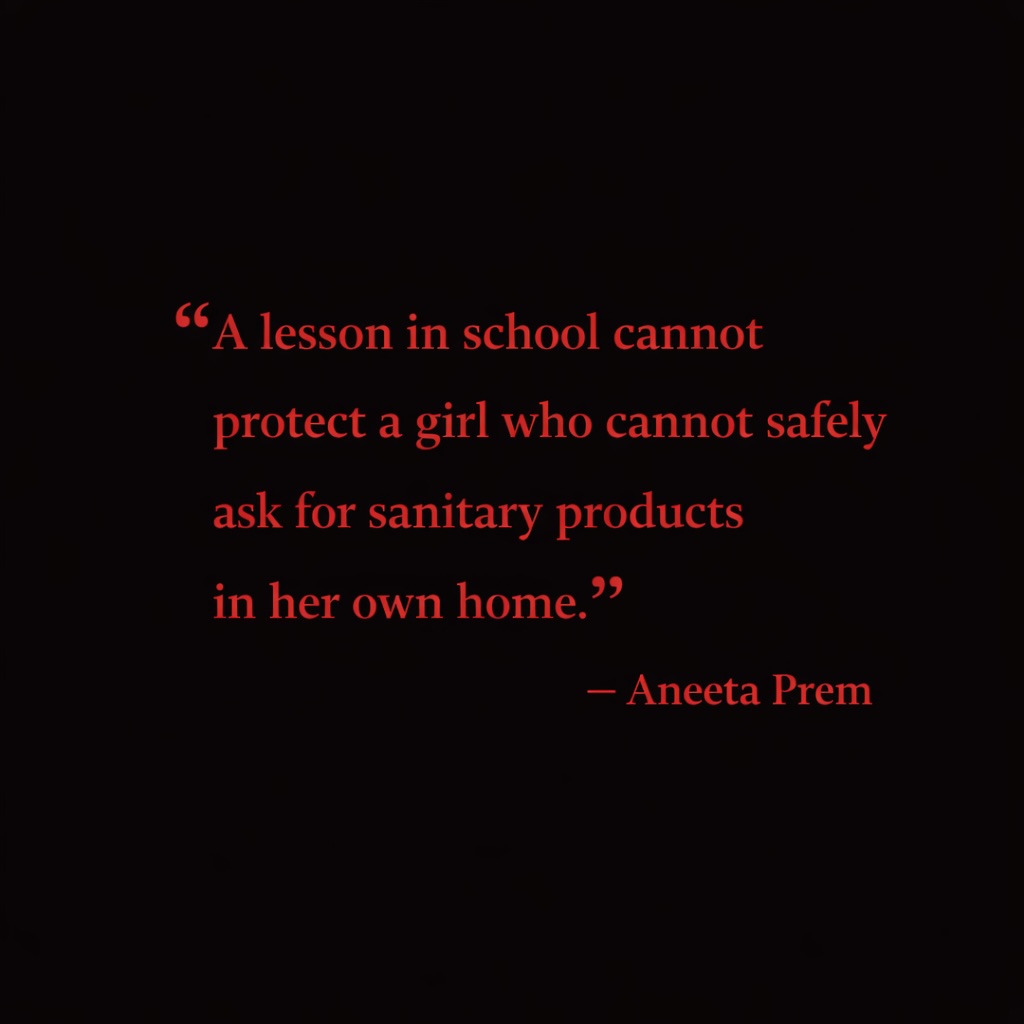
A pupil may know exactly what menstruation is and still lack products. She may know where products are available in school but feel unable to ask for them elsewhere. Poverty, embarrassment, family rules and stigma can all change whether theoretical access becomes real access.
Education is necessary, but dignity needs more than a lesson
A good menstrual-health lesson can explain periods, pain, products and when to seek medical help.
What it cannot do by itself is put a pad in a bathroom when somebody has no money. It cannot guarantee privacy at home. It cannot remove every belief that treats menstruation as dirty, shameful or something a girl must hide.
That is why policy should be judged not only by what pupils are taught, but by whether they can manage menstruation safely and with dignity wherever they are.
Myths about virginity still affect bodily autonomy
One harmful belief that continues to affect girls and women is the idea that the hymen can prove whether somebody is a virgin, or that using a tampon changes a person’s sexual status.
That is medically wrong.
The Royal College of Obstetricians and Gynaecologists has stated that the appearance of the hymen is not a reliable indication of whether vaginal intercourse has taken place and that no examination can prove a history of vaginal intercourse.
A tampon is a menstrual product. Using one is not evidence of sexual activity.
This is more than a technical fact. Where myths about virginity influence which menstrual products a girl feels permitted to use, misinformation can restrict an ordinary healthcare choice.
Girls need accurate information about their bodies without shame and without having their worth tied to an anatomical myth.
Period poverty is not one experience
Some people cannot afford products. Others can afford them but cannot easily obtain them. Some live in households where menstruation is not discussed. Some have medical conditions that make periods particularly painful or heavy. Some need accessible products or facilities because of disability.
That means one national intervention will not solve every barrier.
Good policy needs several parts working together:
- free products in schools and colleges;
- clear information about where products can be obtained outside school;
- menstrual-health education that covers pain, heavy bleeding and when to seek help;
- myth-busting around hymens, tampons and virginity;
- privacy and dignity in school facilities;
- support that does not require pupils to make a public or embarrassing request; and
- routes to healthcare where symptoms may indicate an underlying condition.
What schools should ask
Schools should not assume that having products somewhere on site means every pupil can access them comfortably.
Useful questions include:
- Are products available without a pupil having to explain themselves publicly?
- Do pupils know where they are?
- Are there options suitable for different needs and preferences?
- Is support available before holidays as well as during term?
- Does menstrual-health education challenge common myths?
- Do staff know how to respond when a pupil repeatedly misses school because of period symptoms or lack of products?
Those are practical questions, not ideological ones.
Health matters too
Period poverty should not obscure menstrual health.
Severe pain, very heavy bleeding, fainting or symptoms that repeatedly interfere with school and daily life may need medical assessment. Education should help young people distinguish between common menstrual discomfort and symptoms that deserve professional advice.
The renewed Women’s Health Strategy is right to connect menstrual education with healthcare. The challenge is making sure the pathway works in practice.
Final word
Girls cannot learn their way out of period poverty.
Education can challenge myths and help somebody understand their body. Free products can remove a direct financial barrier. Both are important.
But dignity depends on whether the person can actually obtain what they need, use the product that is right for them, ask for help without humiliation and receive healthcare when symptoms are not normal for them.
A period should never become a reason to miss education, lose dignity or feel ashamed of an ordinary bodily function.
Sources and further reading
- Department of Health and Social Care: renewed Women’s Health Strategy
- Government response on menstrual health
- Department for Education: period-products scheme
- RCOG: hymen, virginity testing and harmful myths