




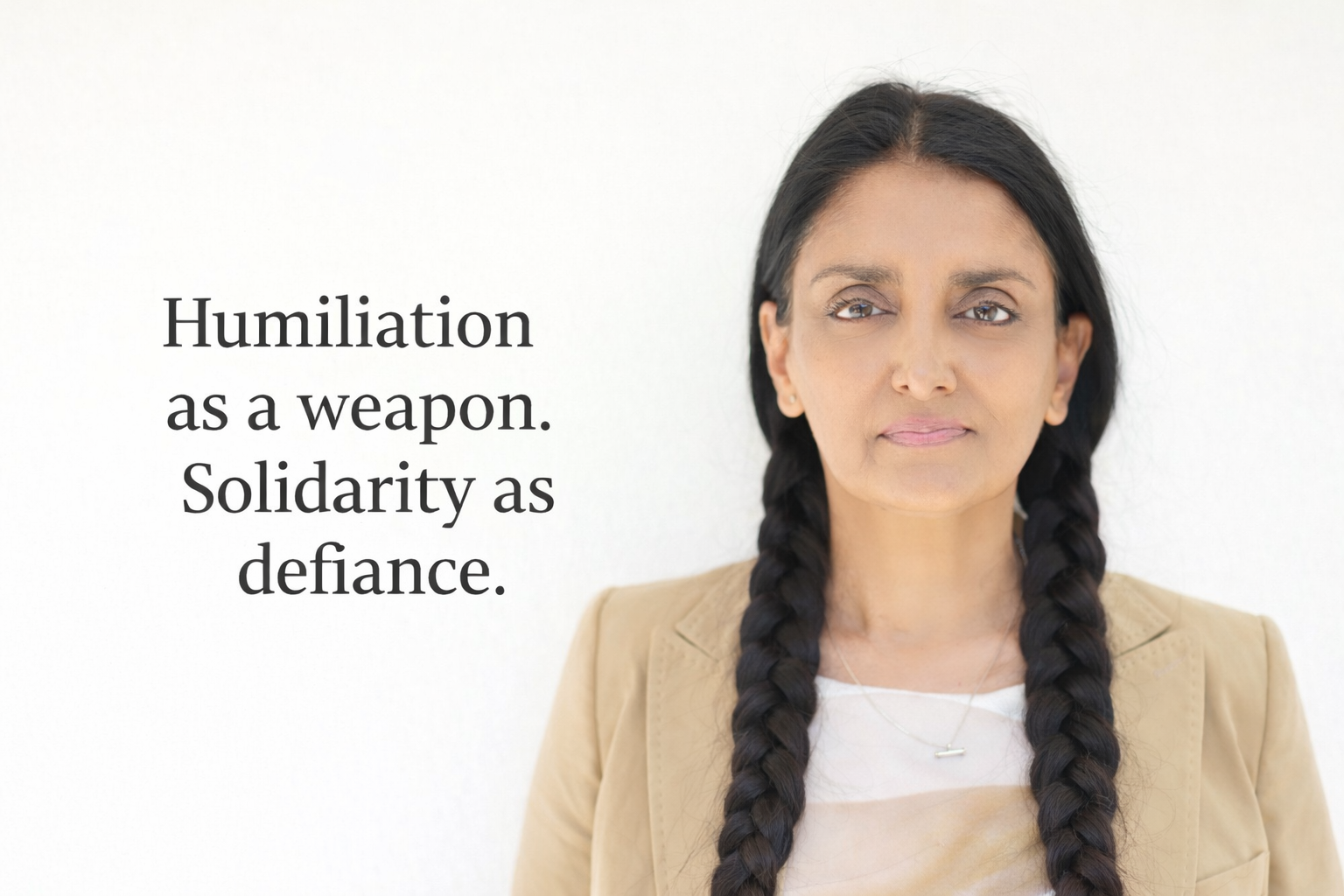
A braid was held up as a trophy. Not to win a fight, but to humiliate a woman after death. The camera mattered, because the point was never only the act. The point was the message.
In January 2026, Kurdish and regional outlets reported footage of a man holding up a severed braid and claiming it was taken from a Kurdish female fighter from the Women’s Protection Units (YPJ) after her death. Rudaw reported that some sources identified the man, but it could not independently verify that identification. That caution is the correct standard. If we care about women’s dignity, we should also care about truth.
Then came the reply. Women began braiding their hair on camera and sharing it in defiance. bianet described the campaign spreading rapidly, moving from social media into public life. The message was simple: you can cut one braid, but you cannot cut what it stands for.
What happened, and what we can say with confidence
Strip away rumour and the core facts still hold.
A braid was cut from a dead woman and displayed as a trophy in filmed mockery. That is not incidental cruelty. It is humiliation made performative.
The backlash was equally clear. Kurdish women, and allies beyond Kurdish communities, braided their hair as a public refusal. In parts of north east Syria, protests were also reported where women braided one another’s hair in solidarity.
Why braids are symbolic in Kurdish life
To outsiders, this can look like a gesture. In Kurdish life, a braid carries meaning.
A museum feature on Kurdish visual culture notes that intricately braided hair is commonly worn with traditional dress, particularly around Newroz, and it records older mourning practices where women cut off braids at gravesites. Braids can hold pride, memory and grief in a single thread.
Rudaw also reports a Kurdish researcher describing the braid as culturally significant, and in recent history a symbol of female power and resistance. That matters, because it explains the intent behind the trophy. If you want to degrade someone, you target what they value, not what is replaceable.
Why perpetrators turn women into trophies
Humiliation is used because it travels.
A killing ends a life. A trophy aims to control the living. It is designed to do three things at once: dehumanise the victim, warn other women, and reward cruelty with status.
The filming is not a side detail. The camera turns degradation into propaganda. It spreads fear without a single extra act of violence.
That is why the Kurdish braid protest landed so powerfully. It interrupted the intended lesson. It refused to carry shame on the victim’s behalf.
Why this is dishonour abuse
In UK safeguarding, so called honour based abuse is not one offence. It is a context where violence, threats, intimidation, coercion, or abuse are used to enforce a code of behaviour and defend perceived “honour”.
The braid trophy sits on the same continuum. The setting is war, but the mechanism is familiar: a woman’s body is used to police other women, and public shaming is used to enforce obedience through fear.
I use “dishonour abuse” here as a moral description of gendered humiliation and control. I am not suggesting that the reported conduct is a separate offence or automatically falls within the CPS category of so-called honour-based abuse. There is no honour in public degradation. There is only power claiming the right to humiliate.
What the law says about humiliating and degrading treatment
International humanitarian law does not treat humiliation as a footnote.
Common Article 3 of the Geneva Conventions prohibits “outrages upon personal dignity”, including “humiliating and degrading treatment”.
The International Committee of the Red Cross also sets out how the Rome Statute includes “committing outrages upon personal dignity, in particular humiliating and degrading treatment” as a war crime provision.
The legal language is direct for a reason. Dignity is not decoration. In conflict, humiliation is often used to terrorise communities and to erase the humanity of the dead. The ICRC’s International Review has examined this specifically in relation to “outrages against the personal dignity of the dead”.
What action looks like now
Solidarity matters. However, it has to be smart, otherwise it amplifies the original harm.
- Do not share the trophy footage
Do not help degradation spread. Share the braids. Share the refusal. Make dignity more visible than humiliation. - Name the tactic plainly
Call it humiliation. Call it degradation. Call it misogyny performed for a camera. Avoid euphemisms that soften intent. - Use this moment as safeguarding education
Public shaming is a control tactic. In UK practice, it appears across coercive patterns linked to so called honour based abuse. Treat humiliation as risk, not as “culture” to tiptoe around. - Turn symbolism into structure
If you post a braid, attach it to something real: training, funding for specialist support, and better professional competence when women are threatened, silenced, or punished for “dishonour”.
The footage tried to make shame contagious. The response made defiance contagious instead. That is the difference between propaganda and solidarity.
FAQs
What is the Kurdish braid protest?
It is a wave of solidarity where women braid their hair in defiance after footage showed a braid cut from a dead Kurdish YPJ fighter and displayed as a trophy.
Why is a braid such a powerful symbol?
Because braids can carry identity, tradition and memory. When they are cut by force, it signals an attack on dignity, not just a body.
Why do perpetrators use humiliation in war?
Because humiliation spreads fear quickly. It turns violence into a message aimed at controlling the living through shame.
Is humiliating and degrading treatment illegal in war?
Common Article 3 prohibits outrages upon personal dignity, including humiliating and degrading treatment. The Rome Statute also includes related provisions.
How can I show solidarity without spreading harm?
Do not share the trophy footage. Share the braid response, explain your reason, and support credible work that protects women and girls.
Author box
Aneeta Prem is a UK safeguarding campaigner and founder of Freedom Charity. She provides media comment on forced marriage, FGM, dishonour based abuse, and gendered coercion and control.
Media enquiries: contact Aneeta Prem.
Freedom Charity: dishonour abuse
Sources and evidence
- Kurdish women braid hair in protest — Rudaw, 21 January 2026
- Hair-braiding campaign following reported desecration — bianet, 23 January 2026
- Rome Statute Article 8 and outrages upon personal dignity — ICRC
- Outrages against the personal dignity of the dead — International Review of the Red Cross
- CPS prosecution guidance on ‘honour’-based abuse, forced marriage and harmful practices