




By Aneeta Prem
London | 26 March 2026
Noelia Castillo Ramos died in Barcelona on 26 March 2026 after a 601-day delay caused by legal challenges to her euthanasia request. Spain’s law set out the legal route. The harder question now is whether a vulnerable young woman was failed long before the courts reached their final answer.
On 26 March 2026, Noelia Castillo Ramos died in Barcelona after a long and deeply contested legal battle over her right to euthanasia. She was 25. By then, doctors, review bodies and the courts had all spoken. The law had given its answer. The more disturbing question is what happened before it ever had to.
Spain’s euthanasia law was introduced to regulate a narrow set of cases involving grave, chronic and disabling suffering, or grave and incurable illness. It is framed around autonomy, informed choice and safeguards against external pressure. The law says such cases must be clearly defined and subject to guarantees that protect the absolute freedom of the decision and rule out outside pressure.
Reporting in EL PAÍS says Noelia’s life had already been marked by parental neglect, time under the protection of the Catalan authorities, episodes of sexual abuse and sexual aggression, and the fall in October 2022 that left her paraplegic. It also says Catalonia’s review body approved euthanasia in July 2024 after concluding that she met the legal criteria. What followed was not relief, but delay, with 601 days passing before the procedure finally took place.
That is why this case should trouble anyone who works in human rights, safeguarding or violence against women and girls. The central issue is not only whether the final legal process was lawful. It is whether the protection at the beginning was ever good enough. A society should not congratulate itself for respecting autonomy at the final stage if it failed to provide safety, recovery and dignity at every stage before that.
That means asking harder questions about the systems around her. Was there enough continuity of care for a deeply vulnerable young woman? Was the response to sexual violence strong enough, early enough and sustained enough? Was there a realistic path to dignity in life, not only a legally protected route at the end of it? A legal framework can regulate the final act. It cannot repair years of accumulated harm.
Noelia Castillo’s death should force us to ask not only whether the law allowed her to die, but whether the state and its institutions did enough to help her live in safety and dignity after what had already been done to her.
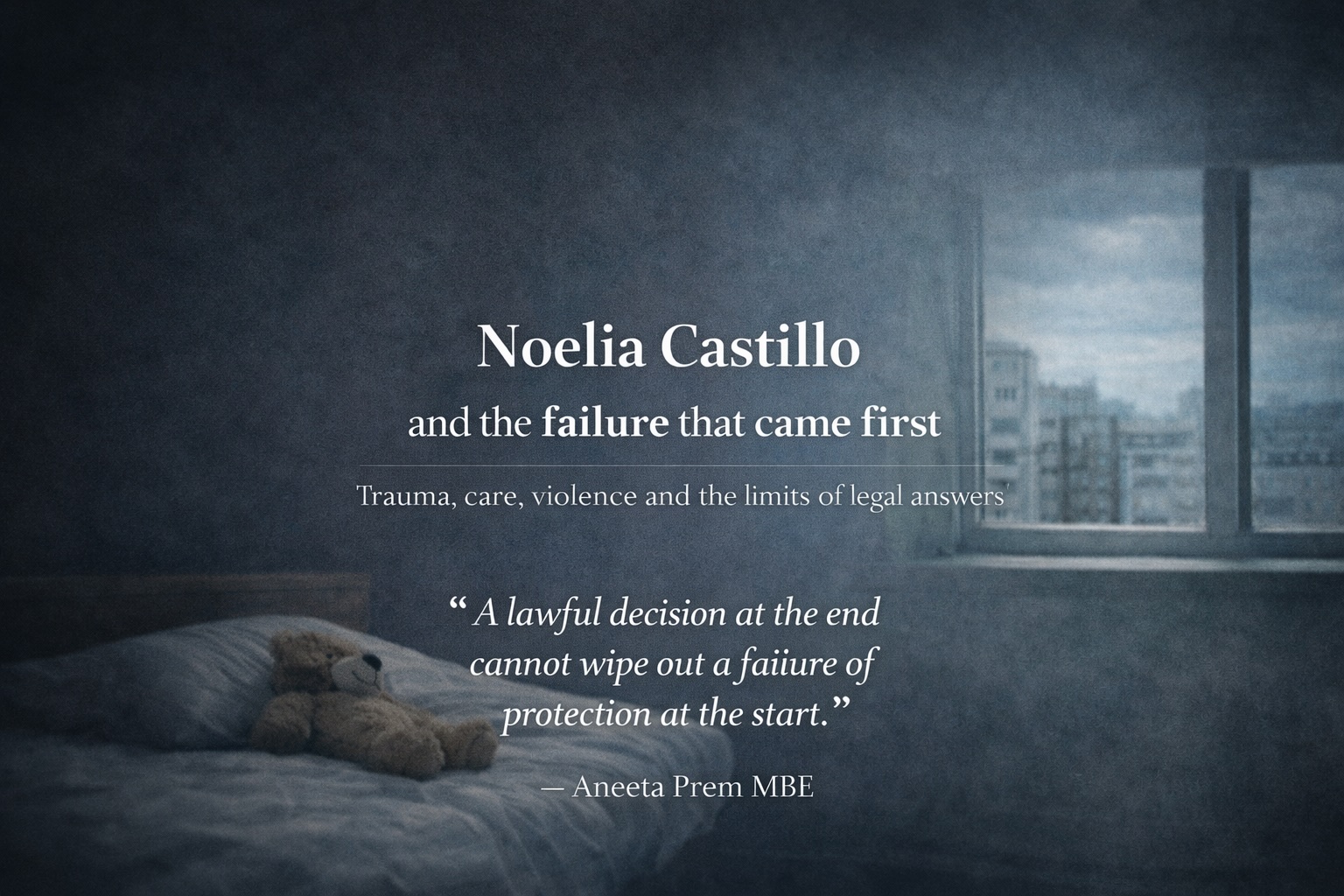
“A legal decision at the end cannot erase a failure of protection at the start.”
Aneeta Prem
Sources and further reading
- Spain’s Organic Law 3/2021 regulating euthanasia — Boletín Oficial del Estado
- Noelia Castillo and the legal proceedings — EL PAÍS, 26 March 2026