




Human Rights
2
 min read

World Book Day Books for Schools: Stories That Help Protect Children

Why Aneeta Prem’s safeguarding books help children understand forced marriage and female genital mutilation

Written by

Aneeta Prem

Published on

March 6, 2026

WorldWorld Book Day Books for Schools: Aneeta Prem on Stories That Help Protect Children

How the safeguarding books But It’s Not Fair and Cut Flowers help pupils understand forced marriage and female genital mutilation

By Aneeta Prem MBE

Every year World Book Day celebrates the power of reading.

Children dress as characters from their favourite stories, classrooms fill with books, and schools across the country encourage young people to discover the joy of reading.

But some books do something else as well.

Some books help protect children.

That belief led me to write But It’s Not Fair and Cut Flowers. Both books were written to help young people understand forms of abuse that are rarely discussed openly, including forced marriage and female genital mutilation.

These issues are not distant problems. They exist in the UK today.

Many children affected by these practices may not recognise what is happening to them. They may not realise that what they are experiencing is wrong, or that help exists.

Stories can help change that.

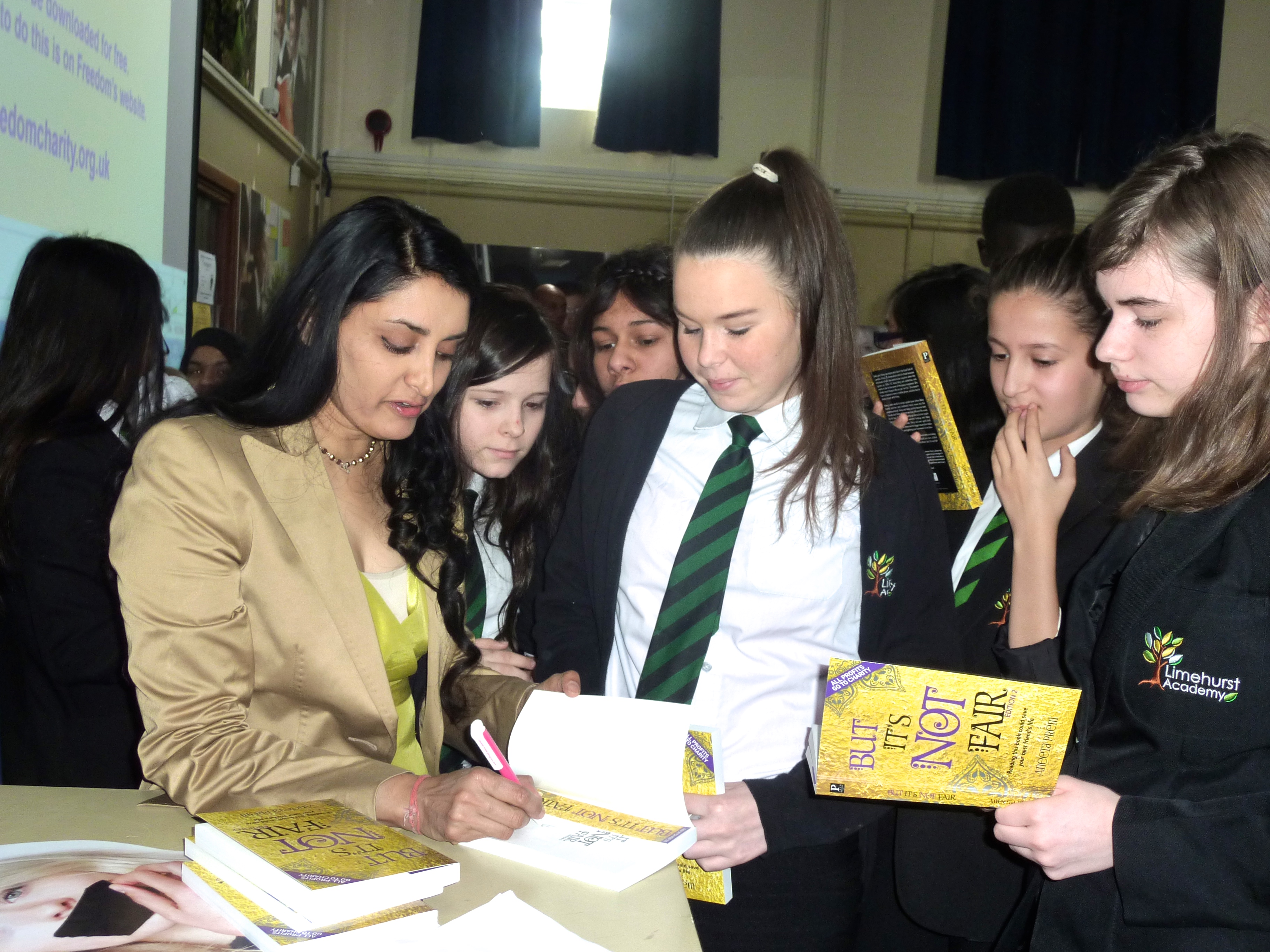
Aneeta Prem MBE, founder of Freedom Charity, wrote But It’s Not Fair and Cut Flowers to help schools use stories as a way of discussing safeguarding issues such as forced marriage and female genital mutilation.

Teachers searching for World Book Day books for schools are often looking not only for stories that inspire imagination but also for books that help pupils understand their rights and recognise harmful situations.

Sometimes a story can begin a conversation that adults struggle to start.

Why Safeguarding Stories Matter

Stories have always helped young people understand the world around them.

In classrooms, teachers frequently use storytelling to explore complex issues in a way that is thoughtful and age-appropriate.

When pupils follow the experience of a character, they can discuss difficult subjects without feeling that the conversation is directed personally at them.

This approach allows important safeguarding topics to be explored with care.

World Book Day provides a valuable opportunity for schools to highlight books that help pupils understand not only the joy of reading but also the importance of recognising when something is wrong.

Safeguarding education is not about frightening children. It is about giving them knowledge, confidence and reassurance that they can speak to a trusted adult if they feel unsafe.

Why I Wrote These Books

I founded Freedom Charity to raise awareness of forced marriage and related dishonour abuse.

Over the years I have visited many schools and spoken with young people who had never heard the term forced marriage before.

Some did not realise that pressure from family members could be wrong.

Others believed they had no choice.

Education must come before crisis.

Young people need knowledge and confidence before they find themselves in a situation where they feel powerless.

Stories provide one of the most effective ways to begin that process.

Through a character’s experience, pupils can explore ideas about choice, pressure, safety and personal freedom.

That is why storytelling plays such an important role in safeguarding education.

The Story Behind But It’s Not Fair

But It’s Not Fair tells the story of a young girl who discovers that decisions about her future are being made without her consent.

Through the character’s experience, the book explains that forced marriage is wrong and that young people have the right to choose their own future.

The book is accredited by the PSHE Association and is used by teachers and safeguarding professionals as part of discussions about rights, consent and personal safety.

In many classrooms it becomes the starting point for conversations about personal choice and the importance of speaking to a trusted adult.

Understanding Harm Through Cut Flowers

Cut Flowers helps young readers understand female genital mutilation and why girls must be protected from harmful practices.

The story encourages discussion about dignity, safety and respect.

Teachers and safeguarding professionals often use the book to explain that harmful traditions must never take priority over the wellbeing of a child.

Through storytelling, pupils can understand that every child has the right to be safe.

More Than 100,000 Books Reaching Children

Through Freedom Charity, more than 100,000 copies of these books have reached children, schools, libraries and safeguarding professionals.

Teachers often describe the same moment after reading the book in class.

The lesson ends.
Children pack their bags.
Most leave the classroom.

But sometimes one child stays behind.

They ask a quiet question.

In safeguarding work, that moment can matter enormously.

Education gives children the language to describe what is happening to them and the confidence to speak to a trusted adult.

Sometimes a story is the first step in that process.

Books for Schools on World Book Day

Each year many teachers search for World Book Day books for schools that help pupils explore real issues as well as fictional adventures.

Stories allow children to discuss difficult topics through characters and narrative rather than through direct instruction.

Books such as But It’s Not Fair and Cut Flowers are now used in schools as part of wider safeguarding education, helping pupils understand their rights and recognise when something is wrong.

Schools and safeguarding professionals looking for further information about this work can find resources through Freedom Charity.

https://www.freedomcharity.org.uk

A Different Way to Celebrate World Book Day

World Book Day celebrates the joy of reading.

But it also reminds us that stories can shape how children understand the world around them.

Sometimes a story helps a child realise they are not alone.

Sometimes it helps them recognise that something is wrong.

And sometimes that moment gives them the courage to speak.

That is why safeguarding stories matter.

About the Author

Aneeta Prem MBE is the founder of Freedom Charity, which works with schools and communities across the UK to raise awareness of forced marriage and related abuse.

Her books But It’s Not Fair and Cut Flowers are used by teachers and safeguarding professionals to help young people understand their rights and recognise harmful situations.

She is also the CEO of the Trigeminal Neuralgia Association UK, supporting people living with trigeminal neuralgia and facial pain conditions.

Book Day Books for Schools: Stories That Help Protect Children

World Book Day Books for Schools: Aneeta Prem on Stories That Help Protect ChildrHow the safeguarding books But It’s Not Fair and Cut Flowers help pupils understand forced marriage and female genital mutilationBy Aneeta Prem MBE

Contact me

Get in touch

I'd love to hear from you.
Thank you! Your submission has been received!
Oops! Something went wrong while submitting the form.
Latest posts

News Articles

Tips, guides, useful information, and the latest news.

Human Rights
3
 min read

Noelia Castillo and the failure that came first

Noelia Castillo Ramos died in Barcelona on 26 March 2026 after a long legal battle over her right to euthanasia. Her death will reignite debate over assisted dying. The deeper human rights question is what failed her long before the final decision.

Read post
Human Rights
3
 min read

FGM reconstruction surgery UK | Britain still has no proper NHS pathway

Female genital mutilation reconstruction UK, NHS pathway for FGM survivors, clitoral reconstruction UK, FGM survivor care UK, Women and Equalities Committee FGM reconstruction

Read post
Human Rights
3
 min read

International Women’s Day 2026: Rights Mean Nothing Without Justice

In a world where no country has full legal equality for women and girls, the deeper scandal is no longer ignorance. It is the failure to act while the harm is still preventable.

Read post
Human Rights
2
 min read

World Book Day Books for Schools: Stories That Help Protect Children

Why Aneeta Prem’s safeguarding books help children understand forced marriage and female genital mutilation

Read post
Human Rights
3
 min read

Economic abuse linked to one domestic abuse death every three weeks, new report finds

A new UK report says economic abuse featured in more than half of domestic abuse-related death reviews, with public bodies still failing to identify it consistently.

Read post

Zero Discrimination Day: When Postcode Decides Who Gets Diagnosed Why trigeminal neuralgia exposes hidden inequality in NHS pathways

Zero Discrimination Day, marked on 1 March, asks where inequality persists inside systems rather than through intent. In UK healthcare, discrimination often appears as delay, variation, and missing data. Trigeminal neuralgia exposes how postcode, rather than need, can shape who is diagnosed, referred, and treated in time.‍

Read post