




A Christmas period safety guide you can begin on any day
By Aneeta Prem
Aneeta Prem is a UK safeguarding expert and the founder of Freedom Charity. Her work focuses on domestic abuse, coercive control, forced marriage, and violence against women and girls. She writes from frontline practice, policy work, and survivor-led safeguarding.
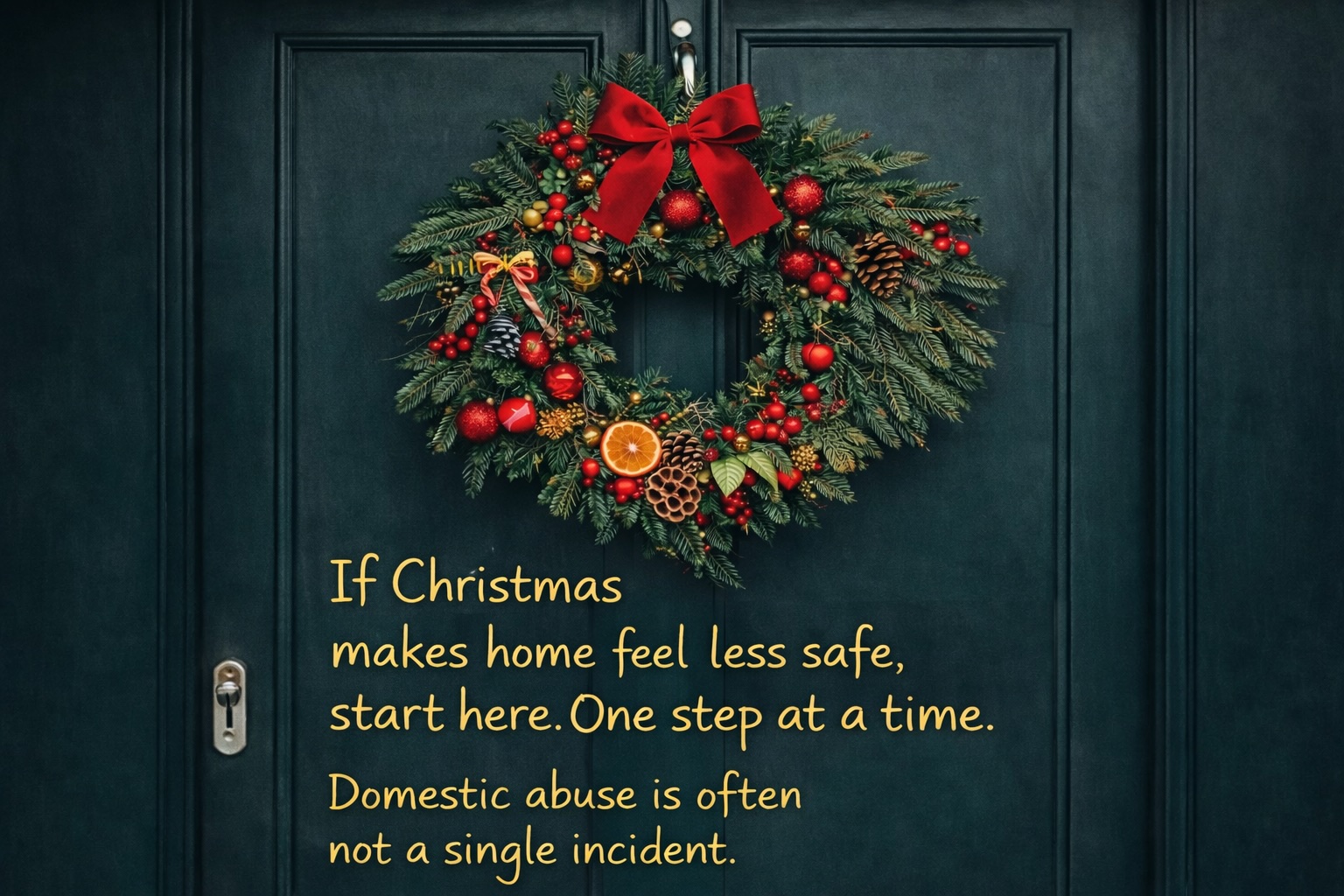
If Christmas makes home feel less safe, start here.
Domestic abuse is often not a single incident. It is a pattern of control.
This is a safety guide for real homes, where people do not get a second take.
Emergency: 999
If you cannot speak to 999 on a mobile:
Call 999. Listen to the operator. When prompted, press 55 to confirm it is a genuine emergency and to be connected to police.
National Domestic Abuse Helpline (Refuge): 0808 2000 247
Free, confidential, available 24 hours a day.
If someone might check your phone:
Use a safer device if possible. If not, use private browsing and clear history only when it is safe to do so.
Christmas has a way of compressing life into the home. Routines fall away. People are around more. Doors close earlier. For many households, that is simply tiring. For someone living with domestic abuse or coercive control, it can be frightening, because proximity becomes power.
The Office for National Statistics estimates that 2.3 million adults experienced domestic abuse in England and Wales in the most recent reporting year. The NHS is clear that domestic abuse can include physical, emotional and sexual abuse, and that it can occur within couple relationships or within families.
What makes Christmas different is not the decorations or the food. It is the loss of escape. School and work pauses. Friends are busy. Safe excuses disappear. Someone who is controlling has more access, more visibility, and more opportunity to enforce compliance.
This is not festive content. It is a safety guide for real homes, written to be saved, returned to, and used quietly. You do not need to do everything. One safe step is enough.
Domestic abuse is often misunderstood because it does not always announce itself as violence. It can look like control over money, monitoring your phone, deciding who you see, when you sleep, how you dress, or whether you are believed. It can include threats, humiliation, sexual coercion, or persistent intimidation.
That pattern matters. Controlling or coercive behaviour in an intimate or family relationship is a criminal offence under UK law. Many people do not recognise what is happening until long after the behaviour has been normalised. If you are reading this and thinking, “It is not always physical, so maybe I am overreacting,” you are not.
These are not “tips”. They are quiet actions that widen your options without drawing attention. Take what you can. Leave what you cannot.
Name it, privately.
Abuse often works by creating confusion. One sentence in your own mind can cut through it: This is abuse. Naming it is not drama. It is clarity.
Find your safest window.
Most people living with coercive control learn when it is safest to act. A shower. Taking the bins out. A moment when someone is asleep or distracted. Plans must fit your reality, not an ideal version of it.
Choose one trusted person.
Pick someone calm and discreet. Someone who will not confront your partner or family member and escalate risk. Agree a simple code phrase that means “call the police”.
Know how to move towards safety.
If tension rises, try to position yourself closer to an exit and away from rooms that trap you. The aim is not to win an argument. It is to reduce harm.
Keep a phone charged.
Battery life matters. Charge daily. If you have an older handset, keep it charged and hidden.
Put key numbers on paper.
Phones can be monitored, searched, or taken. Write down emergency numbers and one trusted contact. Hide the paper somewhere ordinary.
Rehearse what to do if you cannot speak.
If you ever need urgent police help but cannot speak, call 999, listen, and press 55 when prompted. Memorising this matters.
Hide a small amount of cash if it is safe.
Even a small note can cover transport or essentials. Hide it somewhere that does not look like a plan.
Identify essential documents and medication.
You do not need to gather them today. You need to know where they are. ID, bank cards, prescriptions, children’s documents.
Use ordinary excuses as safety.
Taking the bins out. A quick shop. Walking the dog. Small, believable reasons to step outside can create brief but important contact with the outside world.
Search for help more safely.
If you look up support online, use private browsing and clear history only when it is safe to do so.
Check what can track you, only when you are alone.
Location sharing, shared accounts, smart devices, and family settings can all be used to monitor someone. If changing settings will be noticed, do not do it yet.
Give children one simple safety rule.
Children should not manage adult danger, but they do need a plan. Keep it simple. Where to go if shouting starts. Who to call.
Plan around predictable flashpoints.
Gatherings, money pressures, alcohol, and family expectations can coincide with escalation. Abuse is not caused by stress, but stress can increase entitlement to control.
Keep a quiet record if it is safe.
A brief note of dates, a screenshot, or a short diary line can help later. Never put yourself at greater risk to collect evidence.
Make one contact with specialist support.
You do not need to tell your whole story. One sentence is enough: I need to talk safely.
Stop blaming yourself for how long it takes.
Many survivors seek help repeatedly before they receive effective protection. Leaving is complex and can increase danger. Staying does not mean you failed.
Remove real time location clues.
Avoid live social media posts, check-ins, and location tags if you are being monitored.
Trust your fear.
Walking on eggshells is not a flaw. It is a survival response. Take your instincts seriously.
Treat despair as urgent risk.
If you feel suicidal or fear you might harm yourself, seek immediate help. Call 999 or go to A and E. You deserve urgent care.
Ask a neighbour to listen.
You do not have to explain everything. One sentence can save a life: If you hear threats or screaming, please call the police.
Be careful when planning separation.
Leaving can increase risk because control is being challenged. Plan with specialist support where possible.
Choose tomorrow.
If all you can do today is save a number, rehearse what to do in an emergency, or read this quietly, that still counts. One step at a time is not a slogan. It is how people get out.
This is not festive content. It is a safety guide for real homes, where people do not get a second take.
If you share anything this Christmas period, share this:
National Domestic Abuse Helpline: 0808 2000 247
If you cannot speak to 999 on a mobile, press 55 when prompted
Aneeta Prem
What is coercive control in UK law?
Controlling or coercive behaviour in an intimate or family relationship is a criminal offence under section 76 of the Serious Crime Act 2015.
What is the Silent Solution?
If you call 999 from a mobile and cannot speak, listen to the operator and press 55 when prompted to confirm it is a genuine emergency.
What if my phone is monitored?
Use a safer device if possible. If not, use private browsing and clear history only when it is safe.
Can domestic abuse happen within families as well as partners?
Yes. Domestic abuse can occur in couple relationships and within families.
Office for National Statistics.
NHS domestic abuse guidance.
Refuge National Domestic Abuse Helpline.
Women’s Aid online safety guidance.
Independent Office for Police Conduct guidance on the Silent Solution.
Serious Crime Act 2015, section 76.
https://freedomcharity.org.uk/

The Gambia’s Supreme Court is hearing a case that could weaken the ban on FGM. This clear explainer shows why it matters for child protection worldwide.

When families watch, follow and report: the hidden stalking dynamic behind forced marriage and dishonour abuse

How AI nudification is turning everyday photos into a new form of sexual abuse against children Two strong alternatives, depending on outlet tone: How AI nudification apps are normalising sexual abuse and putting children at risk

Capacity, Consent and Dishonour Abuse: Why “no capacity means no consent” is the safeguard the world is still failing to apply

Female genital mutilation in the UK: what we don’t say out loud. Female genital mutilation is not “a problem elsewhere”. It is child abuse happening in the UK and worldwide, and girls need us to name it.

Balochistan Child Marriages Restraint Act 2025 Provincial law: minimum marriage age 18. Cognisable, non-bailable, non-compoundable offences. Forced marriage is child abuse. The shame lies with the perpetrator, not the child.