






For some young people, even a Valentine’s card can trigger control, punishment and fear. Dishonour-based abuse often begins long before a wedding.
Every February, I am reminded how quickly something as ordinary as a card can become a risk assessment.
Valentine’s Day is rarely about grand gestures. For most people, it is a simple message, a small card, a private moment of being thought of. Ordinary. Harmless.
For some young people, even that is forbidden.
I have spent years supporting children and young adults facing forced marriage and dishonour-based abuse, and Valentine’s Day is one of the moments that exposes control most clearly. A harmless card can become “evidence”. A message can become a trigger. A friendship can be rebranded as shame.
This is not romance. It is coercive control.
I have heard this from survivors too many times, and it still shocks me:
“I was not allowed to send or receive a Valentine’s card. If I did, my family would accuse me of being ‘a prostitute’. I would be beaten, especially by my brother.”
This is what dishonour-based abuse looks like in real life. It polices feelings, friendships and identity. It punishes normal adolescence. It teaches a child that their body, reputation and future belong to other people.
The language of “honour” is misleading because it softens what is happening. There is nothing honourable about stripping a young person of privacy, choice and safety.
Privacy disappears. A child learns to live as if they are always being watched.
Forced marriage is often misunderstood as a single event: a wedding day, a flight abroad, a sudden disappearance.
In reality, it usually begins much earlier, with a gradual closing in of options.
It begins with:
By the time marriage is mentioned, the groundwork has often been laid through surveillance, intimidation and fear. This is why early intervention matters. Waiting for “proof” can mean waiting until there are no safe choices left.
In England and Wales, forcing someone to marry is a criminal offence.
Valentine’s Day is often dismissed as trivial. It is not trivial if you are living under coercion.
For a teenager, the right to like someone, message them, or be seen with them is not a harmless luxury. It is part of developing identity and autonomy. When that is forbidden, the harm is real.
Valentine’s Day can also intensify risk because it draws attention. Cards, gifts, messages and social media posts make feelings visible. In controlling households, visibility can trigger punishment. Some young people go to school frightened of what will happen if a sibling or parent finds out.
That is why public awareness matters. If we only speak about forced marriage at the point of crisis, we miss the years of coercion that often come first.
No belief system should outweigh a child’s right to live freely.
Abuse does not become acceptable because it is familiar, communal, or wrapped in tradition. If a young person is threatened, controlled, isolated, or harmed in the name of “honour”, the issue is safeguarding.
If you are a teacher, GP, youth worker, neighbour, friend, or relative, take disclosures seriously. Do not negotiate with family members. Do not try to mediate. If there is risk, the priority must always be safety.
Common warning signs include:
Early action can protect options. Delay can close them.
If you are a young person reading this and it feels familiar, hear this clearly.
Wanting to choose your own life is not disloyal.
It is not shameful.
It is normal.
You deserve safety, privacy and freedom.
If you are worried about someone else, take them seriously. Listen. Stay calm. Seek specialist safeguarding advice quickly.
Valentine’s Day sells a fantasy. The truth I want people to see is simpler and harder.
For some children, love is not a celebration. It is a risk.
Affection should never be punished.
A card should never lead to fear.
And no child should be made to carry the weight of “dishonour” for having ordinary feelings.
On Valentine’s Day, the scandal is not missing flowers. It is children living in fear of a card.
This Valentine’s Day, support Freedom Charity. A Red Triangle badge with a heart of gold helps protect young people at risk.https://freedomcharity.org.uk/shop/

FGM prevention matters, but survivor care must not be the unfinished part of UK policy. Aneeta Prem calls for a clear NHS pathway, specialist counselling, trained professionals and research into reconstructive surgery.
Many children are not choosing the best place to spend their time. They are choosing the safest unsafe place available.
Dishonour Abuse is abuse, coercion or violence justified through claims of family reputation, shame or so-called honour. I use the term because “honour-based abuse” repeats the perpetrator’s excuse, while Dishonour Abuse names the conduct and places responsibility where it belongs: with the person causing harm, not the victim, child or survivor.

The murder of Henry Nowak raises difficult questions about policing, evidence and the duty to preserve life
The death of Twisha Sharma has reopened a global question about dowry abuse, coercive control, family reputation and why women are still judged by what their families can provide.
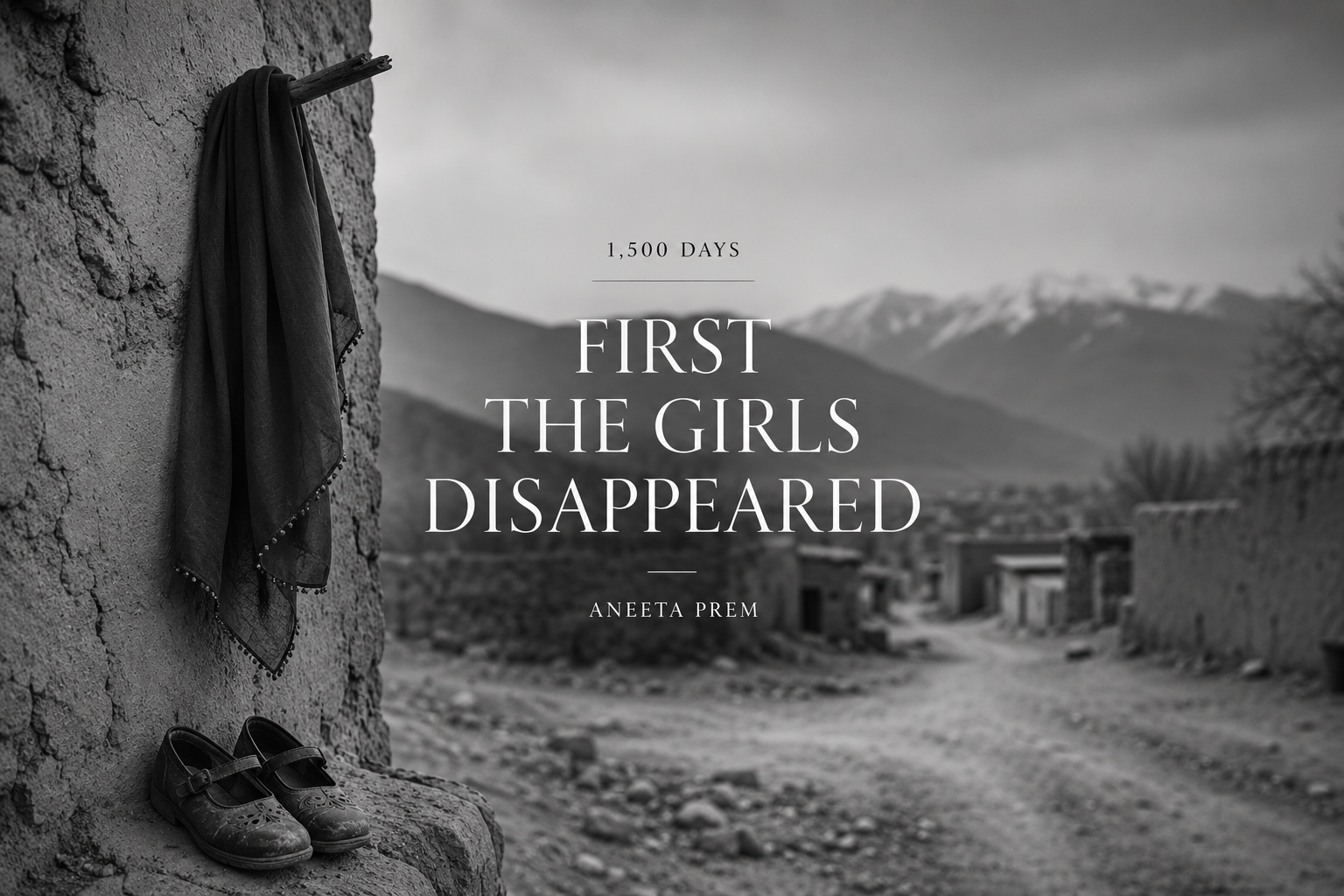
Afghanistan's child marriage is worsening as hunger, aid cuts and Taliban family law place girls at risk. Aneeta Prem writes on why silence is not consent.