




Reviewed and updated 22 August 2026.
By Aneeta Prem MBE
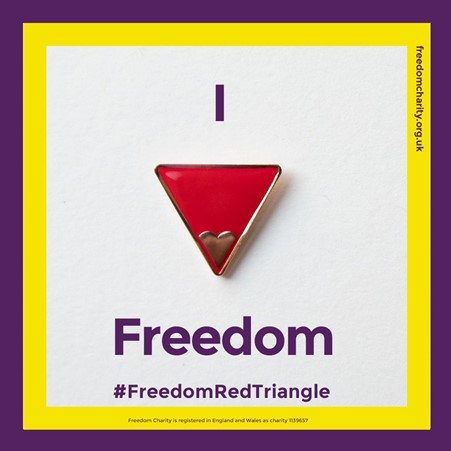
Freedom Charity created and registered the Red Triangle as a visible symbol against female genital mutilation. The small downward-facing red triangle is designed to make a simple position clear: FGM is abuse, and silence should never protect it.
A symbol cannot safeguard a child by itself. Its value is in what happens next — a question, a conversation, a lesson, a disclosure handled safely, or somebody deciding to learn more.
What the Red Triangle represents
Freedom Charity uses the badge to represent girls’ safety, bodily autonomy, equality and the refusal to normalise FGM.
FGM involves injury to female genitalia for non-medical reasons. UK statutory guidance describes it as child abuse and a form of violence against women and girls. UNICEF estimates that more than 230 million girls and women alive today have undergone FGM worldwide.
The scale of that harm is why awareness has to lead to practical prevention.
Why visible symbols can matter
Difficult safeguarding subjects are often hidden by embarrassment, fear or uncertainty. A visible symbol can make it easier to begin a conversation that might otherwise never happen.
That is especially relevant in schools and community settings, where children may not know the formal language for what they are worried about. The badge should never be presented as a guarantee of safety or a substitute for trained safeguarding staff. It is a prompt, not a protection order.
Part of a wider prevention programme
The Red Triangle belongs alongside Freedom Charity’s education work, including Cut Flowers, But It’s Not Fair and the accompanying lesson resources developed for schools. Those lesson resources — not the novels themselves — received the PSHE Association Quality Mark.
The badge also connects with Freedom Charity’s Not in My Name work, which asks boys and young men to reject FGM and other abuse justified through family reputation or expectations.
What people should do if a concern is raised
If a child may be at risk, the priority is safeguarding, not campaigning. Professionals should follow current statutory guidance and their organisation’s procedures. They should not confront family members or attempt informal mediation where that could increase danger.
The Red Triangle works best when it opens the door to accurate information, trained professionals and safe action.
Sources and further reading
- Freedom Charity: Red Triangle Badge against FGM
- GOV.UK: multi-agency statutory guidance on FGM
- UNICEF: global FGM data