




Archive record reviewed and updated 22 August 2026.
By Aneeta Prem MBE
Cut Flowers was first published in 2016. I wrote it to help young people understand female genital mutilation through a story rather than through graphic or frightening instruction.
The book’s launch was not intended to be simply a literary event. It was part of a wider safeguarding effort to get FGM discussed more confidently in schools, families and professional settings.
The 2016 launch
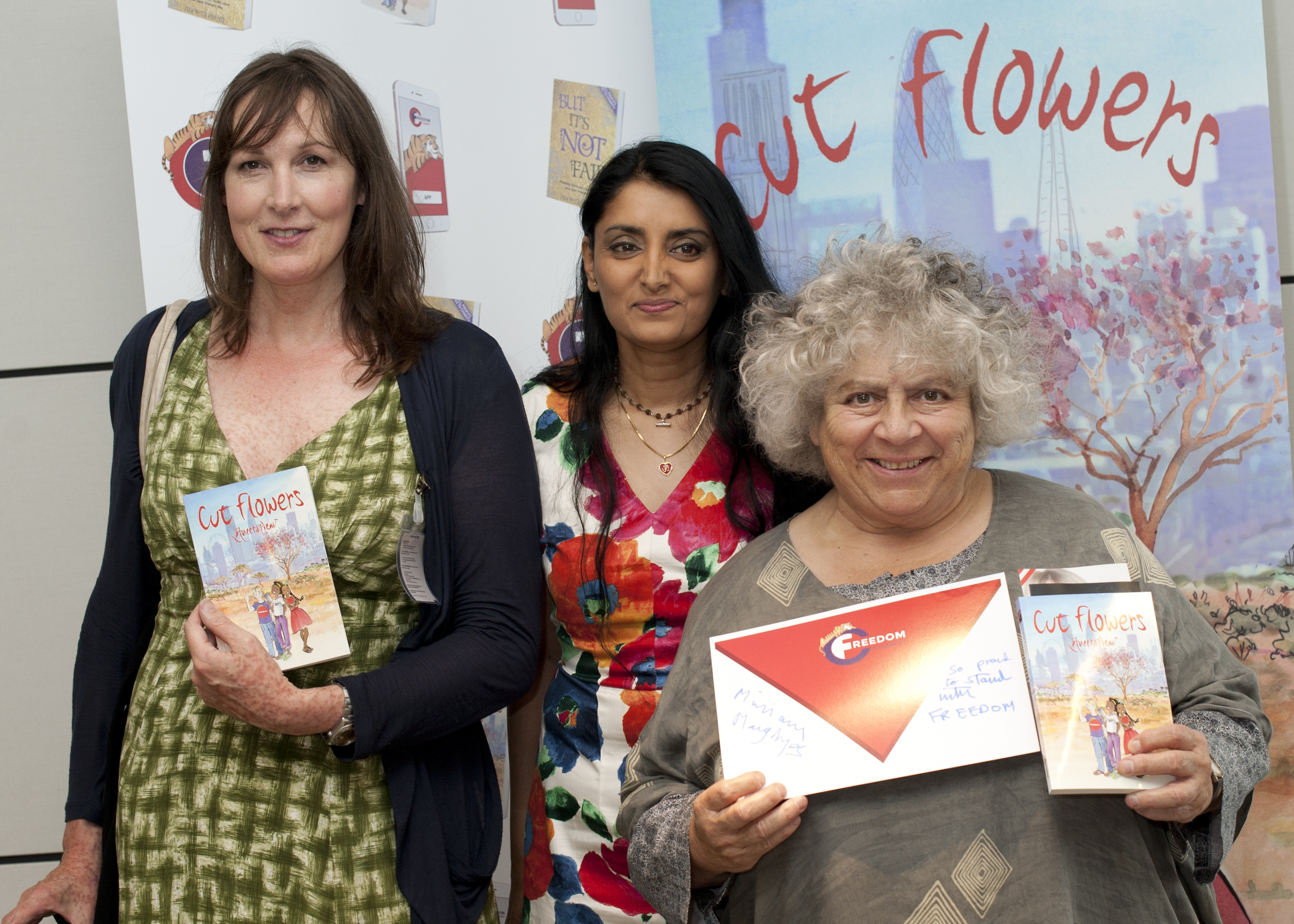
The public history of Cut Flowers records two important launch events in June 2016.
One took place at the House of Commons and was hosted by Nicky Morgan, who was then Secretary of State for Education and Minister for Women and Equalities.
A separate event at Reed Smith was attended by Miriam Margolyes OBE, who wrote the foreword to the book.
These photographs and this page are retained as part of the public record of the book’s launch and the safeguarding work around it.
Why I wrote Cut Flowers
FGM can be difficult to teach well. The subject can become graphic very quickly, and children sitting in a classroom may have personal or family experience that a teacher does not know about.
I wanted a story that allowed pupils to understand friendship, fear, family expectations, bodily autonomy and the responsibility of adults to protect children without turning a child’s body into shock material.
The purpose is recognition and help-seeking, not fear.
The important PSHE distinction
The novel itself is not PSHE accredited.
Freedom Charity developed separate educational resources to accompany its work on forced marriage and FGM. The PSHE Association worked with Freedom Charity on lesson packs for Key Stages 3 and 4, and those educational resources received the PSHE Association Quality Mark.
That distinction matters. A novel and a structured safeguarding lesson can support one another, but they are not the same thing.
From a launch to a safeguarding resource
The significance of Cut Flowers lies in what happened after the launch: books reaching schools and young people, teachers having a safer route into difficult conversations, and FGM being discussed as a safeguarding and human-rights issue rather than hidden behind silence or embarrassment.
Freedom Charity has since recorded the distribution of more than 100,000 copies of Cut Flowers and But It’s Not Fair across schools, young people and safeguarding settings.
Distribution is a measure of reach, not proof by itself of safeguarding outcomes. The deeper purpose remains giving young people understandable language and trusted routes to help.
Why this page is retained
This is an archive and public-record page documenting the 2016 launch of my second book and the safeguarding purpose behind it.
A book cannot protect a child on its own. It can help a child, teacher or friend recognise that something is wrong and know that the conversation must continue.
Sources and further reading
- Cut Flowers: history and launch record
- Cut Flowers: official book website
- PSHE Association: Freedom Charity lesson packs