




By Aneeta Prem MBE
Awareness is not the same thing as evidence of impact.
For years, safeguarding organisations have worked to make forced marriage and female genital mutilation easier to recognise. Freedom Charity has produced books and educational resources, worked with schools and professionals, and tried to give young people language for risks that can otherwise remain hidden.
That work matters. But reach and good intentions do not answer the harder question:
What changed because the education was delivered?
Not how many books were distributed. Not how many pupils sat in a lesson. Those figures tell us about reach. The next question is whether pupils understood more, remembered it later, recognised risk more accurately, knew how to seek help safely and whether adults were better able to respond.
This is not a claim that Freedom Charity has already proved those outcomes. It is an argument that the next stage of the work should test them independently.
What we already know
The PSHE Association hosts forced-marriage and FGM lesson packs developed with Freedom Charity. It says the packs support safe, effective and age-appropriate teaching at key stages 3 and 4, including recognising forced marriage or FGM and analysing how to access support safely.
That is important quality assurance. But quality assurance and impact evaluation answer different questions. A resource can be suitable for teaching without yet having evidence that a wider programme changes retained knowledge, help-seeking or professional response.
That distinction is not a weakness. It is the starting point for better evidence.
Reach is not outcome
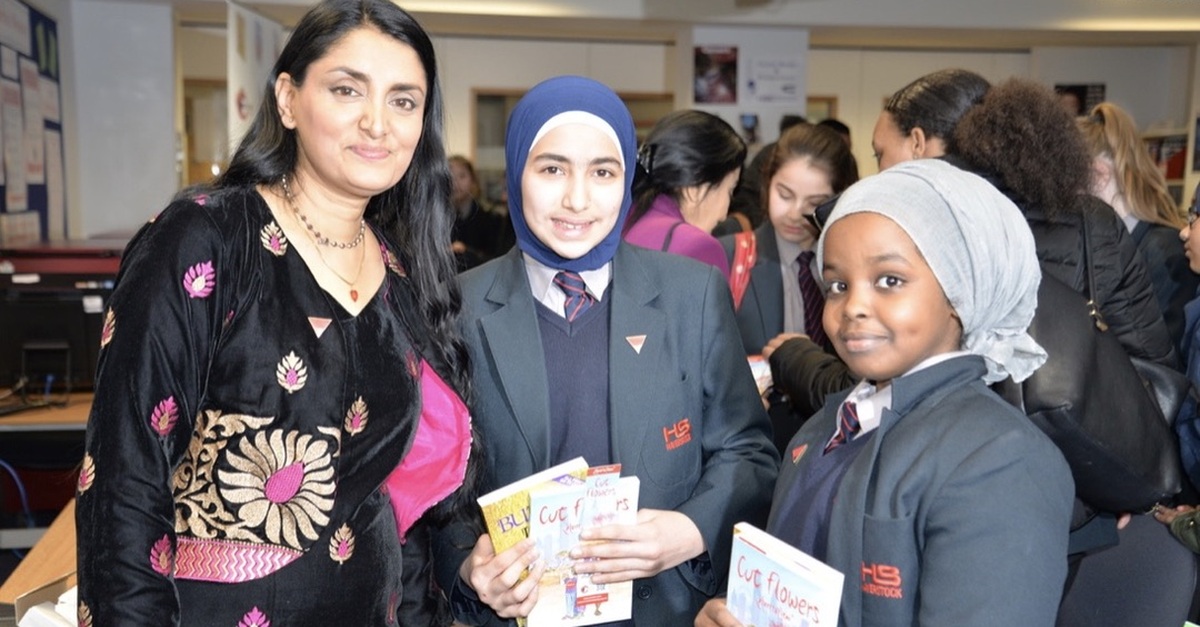
I am proud that Freedom Charity has distributed large numbers of safeguarding books and that schools have used educational resources alongside them. Reach matters because a resource cannot help a pupil who never encounters it.
But reach is the beginning of the evidence chain, not the end.
A pupil can know the definition of forced marriage without knowing what to do if a friend says, “I don’t want to go abroad this summer.” A lesson can be delivered without the learning being retained. Good safeguarding evidence has to separate activity from effect.
What should education achieve?
If forced-marriage and FGM education is working well, I would expect it to:
- Improve recognition. Pupils should be better able to identify coercion, lack of consent, FGM risk and unsafe family pressure without stereotyping cultures or communities.
- Improve retained understanding. The learning should still be there weeks or months later.
- Improve safe help-seeking knowledge. Pupils should know which trusted adults or specialist services they can approach and understand that they should not investigate a friend’s situation themselves.
- Improve adult response. Teachers and safeguarding leads should know what to do with a concern, including when contacting family members or attempting mediation could increase danger.
- Avoid unintended harm. Lessons should not stigmatise pupils, pressure anybody to disclose personal experience or suggest that abuse can be identified from ethnicity, religion or family background.
Those are measurable propositions. They are more useful than a vague claim that a lesson “raises awareness”.
What evidence would justify wider adoption?
If a school, funder, professional body or public institution is being asked to adopt a safeguarding programme, it should be able to judge more than whether the materials look good.
A credible evidence package should answer questions such as:
- Were the intended outcomes defined before the results were known?
- What did pupils know before the teaching, immediately afterwards and at follow-up?
- Was the programme delivered consistently across different schools and teachers?
- Were unintended effects, distress or stigma actively looked for?
- Did results differ between settings or groups?
- Can another school reproduce the approach without depending on one particular speaker or personality?
- What time, training and resources are required to deliver it safely?
That is the point at which evidence becomes useful for adoption. An institution should be able to see not just that something happened, but what changed, for whom, under what conditions and with what limitations.
How the next stage should be tested
I believe Freedom Charity’s education work should now move into a more rigorous phase: an independently designed demonstrator with a manageable group of willing schools before any claim is made about wider impact.
The Government’s updated Magenta Book defines evaluation as the systematic assessment of an intervention’s design, implementation and outcomes. It asks what changed, for whom and why, whether an intervention was delivered as intended, whether there were unintended consequences and what can be improved.
That is a useful standard to learn from even though Freedom Charity is not a government programme.
An initial study could examine baseline understanding, immediate learning, later retention, responses to realistic safeguarding scenarios, consistency of delivery, understanding of referral routes and any unintended distress or stigma.
The independent evaluator should determine the appropriate design, sample, comparison and analysis. Freedom Charity should not design a study whose purpose is to confirm a result it already wants.
Safeguarding comes before research
A pupil must never be encouraged to disclose abuse simply to produce an outcome measure. A survey should not ask children to reveal personal experiences unnecessarily. If a safeguarding concern emerges, the school needs a clear, tested response route before the study begins.
Researchers also need to distinguish between a change in knowledge and a change in the underlying prevalence of abuse.
If more pupils seek help after a programme, that may indicate improved recognition or confidence in disclosure. It does not automatically mean more abuse has occurred. Equally, a fall in disclosures cannot automatically be treated as evidence that risk has fallen.
Independence has to be real
If Freedom Charity commissions or supports an evaluation, the evaluator must be able to report what they find — including no measurable benefit, mixed results, unintended effects or a need to redesign part of the programme.
Independent evaluation is useful only if it can challenge the organisation that commissioned it. A credible project should publish enough about its method, findings and limitations for others to judge the evidence.
If the evidence tells us to change something, we should change it.
What success would look like
I would not define success as proving that one lesson prevents forced marriage or FGM. That would be an extraordinary causal claim and extremely difficult to establish responsibly.
A defensible first goal is to establish whether a carefully delivered programme improves retained understanding, recognition of risk, safe help-seeking knowledge and the quality of the school response without causing unintended harm.
If it does, the next question is whether those improvements can be reproduced in different settings, sustained over time and delivered at a level of effort that schools can realistically maintain.
If it does not, we learn before scaling.
If the evidence is strong enough, schools, funders, professional bodies and public institutions can then decide whether the approach deserves wider adoption. That decision should rest on evidence, not on Freedom Charity’s reputation or my own.
The proposition
The next step is simple: bring together an independent evaluation partner, willing schools and appropriate safeguarding oversight to test the education properly before arguing for wider scale.
The purpose should not be to prove Freedom Charity right. It should be to find out what works, what does not, what needs changing and whether the approach is strong enough for other institutions to use with confidence.
That creates something more valuable than another awareness campaign. It creates evidence that can be examined, challenged, improved and, if it earns the right, adopted.
Final word
I have spent much of my working life arguing that forced marriage and FGM must be recognised earlier and taken more seriously.
But the next stage cannot simply be more awareness.
We now need to know what good safeguarding education changes, how long that change lasts, whether it helps people respond more safely and where it needs to improve.
A safeguarding resource should not ask to be trusted because it comes from a charity with a long record.
It should earn trust by showing what it does.
Sources and further reading
- PSHE Association: Freedom Charity forced marriage and FGM lesson packs
- PSHE Association: Quality Mark and quality-assurance process
- HM Treasury and Evaluation Task Force: Magenta Book 2026
- HM Treasury and Evaluation Task Force: Test and Learn
- Department for Education: Keeping Children Safe in Education 2026