





By Aneeta Prem MBE
Twenty-seven children aged five or under.
Sixty-two aged ten or under.
At least 100 aged twelve or under.
Those are among the figures reported by The Independent from Home Office information obtained through a Freedom of Information request covering referrals to the Forced Marriage Unit between 2021 and 2025.
A referral does not mean every one of those children was forced into marriage. It can concern an actual, potential or suspected forced marriage. That distinction matters. So does the age of the children.
Because this is not the first warning.
Ten years ago, the youngest child we had encountered was six
On 21 February 2016, The Sunday Times published an investigation under the headline “Girls as young as 6 forced to marry”. I told the newspaper:
“The youngest case we have come across was a six-year-old with learning difficulties.”
That was ten years ago.
In August 2013, discussing forced marriage and the long school holiday, I had already warned about what can happen when a child does not return after the summer. I told Al Jazeera:
“If you didn’t come back after the summer break, people think maybe you’ve moved area or moved schools.”
Thirteen summers later, I am still asking the same question.
Have all our children come back?
A school knows who it expected through the gates. If a child is not there, there may be a completely ordinary explanation. A family may have moved. A pupil may have transferred. Parents may have chosen lawful elective home education. A child may be abroad, ill or caught in an administrative error.
Most of these situations will have nothing whatsoever to do with forced marriage or abuse.
But “moved away” cannot be the end of a safeguarding conversation if nobody knows where the child actually went.
If a child transferred, did they arrive?
If the family moved, is the child now known to another school or local authority?
If parents chose home education, has the child been properly accounted for?
If the child travelled abroad and there were already safeguarding concerns, has somebody established what happened?
There is a fundamental difference between knowing that a child is absent and knowing that a child is safe.
Out of sight must never mean out of mind.
An empty chair is not evidence of forced marriage
This distinction is essential. We should never treat ordinary absence as proof of forced marriage, or stigmatise families, cultures, religions or communities.
But safeguarding cannot work if we demand proof of the final form of abuse before we become curious about a vulnerable child.
If a pupil was frightened before the holidays; spoke about an unwanted journey or marriage; changed markedly in behaviour; told a friend “I don’t want to go”; and then did not return, those facts may form part of a safeguarding picture.
From 1 September 2026, the new edition of Keeping Children Safe in Education comes into force in England. It recognises prolonged or repeated absence and children missing education as potential warning signs within a wider safeguarding picture, including risks such as FGM and forced marriage.
Guidance matters. Training matters. Designated safeguarding leads matter.
But guidance can protect only a child whom somebody is still looking for.
What does the national data tell us?
The Department for Education estimates that 143,500 children in England were missing education at some point during the 2024/25 academic year. Another 34,700 were recorded as missing education on the autumn 2025 census date.
“Children missing education” has a specific official definition. It concerns compulsory-school-age children who are not registered at a school and are not receiving suitable education elsewhere. It does not mean every child who is absent.
So those figures do not answer my question.
How many children who were expected back after the summer did not return when expected — and what happened to them?
There is another figure in the DfE data that deserves attention. For children recorded as missing education on the autumn 2025 census date, the reason was unknown or not recorded in 22 per cent of cases. Ten per cent were believed to have moved out of the country and nine per cent were recorded under unsuitable elective home education.
There may be completely safe explanations behind those categories. But when the reason is unknown or not recorded for more than one in five children in that dataset, it is reasonable to ask what we know about outcomes.
I have previously asked the Department for Education for the national information I wanted to understand and was directed towards information held locally rather than given a central figure answering this question.
So I am asking it publicly:
How many children expected back after the summer failed to return? How many were quickly found safe? How many transferred successfully? How many moved abroad? How many could not initially be located? How many unexplained absences resulted in safeguarding enquiries? And how many cases eventually involved forced marriage, FGM, sexual abuse, exploitation, neglect or another serious concern?
I am not asking for every child’s private life to be placed into a national database.
I am asking whether government can see enough of the national picture to know whether vulnerable children are falling between systems.
A safeguarding system must follow the child, not merely the paperwork.
Forced marriage is about consent, not geography
The latest official Forced Marriage Unit statistics reinforce another important point.
The unit provided tailored assistance in 406 cases in 2025. Of those, 163 — 40 per cent — involved people aged 17 or under. Fifty-eight cases, 14 per cent of the total, had no overseas element at all. Twenty of those UK-only cases involved somebody aged 17 or under.
Forced marriage does not require an airline ticket.
There may be an overseas journey. There may be none.
Forced marriage is about coercion and consent, not geography.
Forcing somebody into marriage is a criminal offence. Since February 2023, it has also been an offence in England and Wales to cause a child under 18 to enter a marriage even where violence, threats or another form of coercion is not used. Where sexual activity occurs without consent, serious sexual offences, including rape, may also be committed.
But safeguarding is supposed to begin before we know the ending.
“Reading this book could save your best friend’s life”
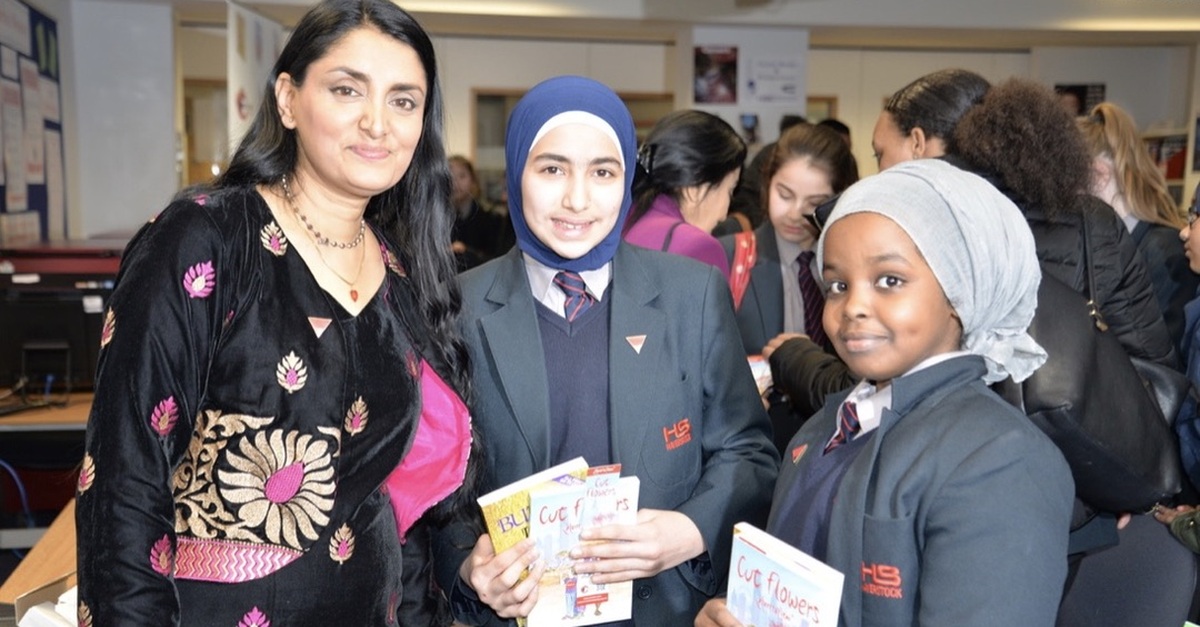
When I wrote But It’s Not Fair, I put a line at the heart of its purpose:
“Reading this book could save your best friend’s life.”
It was never intended as advertising. It was a safeguarding principle.
Children know things.
A friend may know somebody is frightened about the summer holiday before any teacher does. They may know a marriage is being discussed. They may notice that a phone is being checked, that somebody suddenly cannot stay after school, or that a friend is saying:
“My family have plans for me.”
“I don’t want to go.”
Or: “I don’t think I’ll be coming back.”
A young person may not know the statutory definition of forced marriage. They may not recognise what is happening as abuse. But a friend can know that something is wrong.
One of the cases reported by The Sunday Times in 2016 showed why this matters. An 11-year-old girl in London who was being educated at home contacted Freedom Charity after reading But It’s Not Fair. The book had reached her household through her older brother, who had received it at school.
The child at risk was no longer sitting in the classroom.
But safeguarding education from a classroom still reached her.
That is prevention.
Children should never become investigators or carry responsibilities that belong to adults. But we can give them the knowledge and confidence to say:
“I’m worried about my friend.”
And when they say it, adults must know what to do.
A child’s background must never make us ask fewer questions
Do we respond with equal curiosity when every child disappears from professional view?
I cannot prove how a hypothetical child from another ethnicity, religion or social background would have been treated, and I will not make a claim I cannot evidence.
But we should examine our thresholds.
Do we hear “gone abroad” and ask fewer questions? Does “family matter” make professionals more reluctant to intervene? Can a desire to be culturally sensitive unintentionally reduce professional curiosity?
Cultural sensitivity and child protection are not opposites.
A child’s background must never become a reason to ask fewer questions.
Every child deserves the same safeguarding standard. Every child deserves to be accounted for.
The change I am asking for
I am asking the Department for Education a simple question:
Can England establish nationally what happens to children who were expected back in education after the summer but did not return when expected?
If it can, publish the picture.
If relevant information exists across different systems, establish whether those systems are joining up sufficiently to protect children.
And if we cannot currently answer the question nationally, I believe that should change.
I am calling for a national safeguarding return check.
Not another attendance league table. Not a presumption that absence means abuse. Not a database labelling absent children as potential forced-marriage victims.
Something simpler.
When a compulsory-school-age child expected back in education does not return as expected, the system should be capable of establishing that the child has been accounted for and, where there are safeguarding concerns, that appropriate action has followed.
Schools need to know who did not return. Local authorities need to know what happened next. Nationally, government should be capable of understanding whether vulnerable children are disappearing between those systems.
That is a proposition government can accept, reject or improve.
But it should answer it.
I do not want to write this again in 2036
In 2013, I was asking what happened when children did not return after summer.
In 2016, I was talking publicly about a six-year-old girl with learning difficulties.
That same year, a child outside ordinary school life reached Freedom because safeguarding education had reached another child in her family.
Earlier this month, before these latest figures appeared, I wrote about what I call the safeguarding disclosure gap: what happens when the adult a child would normally tell is no longer there.
Now we have new figures involving children aged five and under.
There comes a point when awareness is no longer enough.
As another school year begins, the questions should be simple:
Who was expected? Who arrived? Who did not? Where are they? Who has seen them?
And where there is cause for concern:
Who knows they are safe?
Out of sight must never mean out of mind.
We cannot protect only the children whose abuse has already been identified. We must be capable of finding the vulnerable child before we know the ending.
Because the child at greatest risk may not yet appear in a forced-marriage statistic.
They may simply be the child who did not come back.
How can we protect our most vulnerable children if we do not know they have gone missing?
It is time to answer that question.
Sources and further reading
- The Independent: forced-marriage concerns involving children aged 12 and under, 31 August 2026
- Home Office and FCDO: Forced Marriage Unit statistics 2025
- Department for Education: Children missing education — autumn term 2025
- Department for Education: Keeping Children Safe in Education 2026
- Al Jazeera: UK fears rise in forced marriages overseas, 21 August 2013
- The Sunday Times: Girls as young as 6 forced to marry, 21 February 2016